A 15-minute daily routine for between cleaner visits
Fifteen minutes a day and a short weekly round keep a Singapore home steady between cleaner visits, so each visit goes on real cleaning, not catching up.
By the HomeMaster team · · Updated · 5 min read

Between cleaner visits, your job is not to clean. It is to stop mess from building up. About 15 minutes a day, split into a short morning reset and a slightly longer evening one, plus a weekly round of 20 to 30 minutes, keeps most homes steady for a weekly or fortnightly clean. The cleaner does the detailed work; you deal with the things that get harder the longer they sit.
This routine is built for busy households where nobody has an hour to spare on weekdays. It focuses on the jobs that matter most in a humid climate, and it tells you what to leave alone.
Stop build-up, do not clean twice
Some mess gets worse with time. Grease on a hob hardens, soap scum builds up on shower glass, a spill dries into a sticky patch, damp towels turn musty, and food left out draws ants. Singapore's humidity speeds a lot of this up. These are the jobs worth a minute or two each day.
Other jobs barely change in a week: dusting, mopping, scrubbing grout, wiping cabinet fronts. Those are what you pay a cleaner for. If you do them yourself between visits, you are paying twice for the same work.
The daily resets: about 15 minutes
Two short rounds a day do more than one long one, because they catch mess before it sets.
Morning: about 5 minutes
- Make the beds. It takes a minute and makes the whole home look tidier.
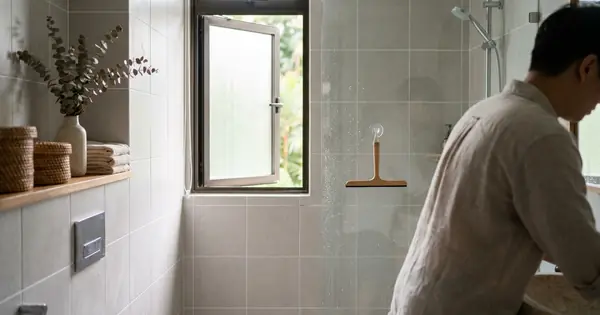
- Squeegee the shower. A few strokes on the glass and tiles after the last shower of the morning keep soap scum and watermarks from building up.
- Hang towels to dry. Spread them out rather than bunched on a hook, and leave the bathroom door open or the exhaust fan on.
- Put breakfast away. Dishes into the rack or dishwasher, and a quick wipe of the counter.
Evening: about 10 minutes
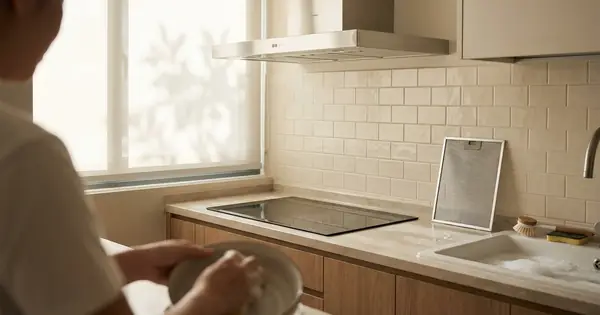
- Wipe the hob and counter after cooking. Once the hob is cool enough to touch, a damp cloth lifts fresh grease easily. Leave it a week and it needs scrubbing.
- Clear the sink. Wash up or load the dishwasher, empty the sink strainer and rinse the sink.
- Take out food rubbish. Tie the bag and take it to the chute or bin rather than leaving it in the kitchen overnight.
- Put things back. Walk through with a basket and return what has drifted: shoes, bags, toys, cups.
- Move the laundry on. Wet clothes left in the machine start to smell, so hang them or put them in the dryer.
Share these out. One person on the kitchen and another on the tidy halves the time. If there are children at home, our guide to a school holidays cleaning routine has ideas for chores by age.
The weekly round: 20 to 30 minutes
Once a week, on a fixed day, do the jobs that keep the home healthy between cleans:
- The Mozzie Wipeout. NEA asks households to remove stagnant water at least once a week: overturn pails, empty plant pot plates, change vase water and loosen hardened soil in pots. NEA's checklist says plant pot plates and vases actually need attention every other day. Our dengue home checks guide walks through it spot by spot.
- The fridge. Clear out old leftovers and wipe any spills on the shelves.
- The microwave. A quick wipe inside before splatters set.
- The bins. Wash out any bin that smells, and let it dry before putting in a new liner.
- Wardrobes and closed rooms. Look for damp or mould spots, especially in rooms that stay shut for most of the day.
- Supplies. Check the cleaner will have what they need: floor cleaner, bathroom cleaner, cloths and rubbish bags.
- Surfaces. Put away the piles of paper and clothes that collect on tables and chairs.
What to leave for your cleaner
| You, daily or weekly | Your cleaner, each visit |
|---|---|
| Wipe the hob after cooking | Clean the hob, backsplash and cabinet fronts |
| Squeegee the shower | Clean tiles, grout, glass and the toilet |
| Tidy things back to their rooms | Dust surfaces, fans and reachable windows |
| Blot and wipe spills | Vacuum and mop every floor |
| Take out food rubbish | Empty bins and clean the balcony |
| Air and dry towels | Change bed linen and iron, if you ask |
The right-hand column is the detailed work our cleaners do against a written 75-point housekeeping standard. Your column keeps it from turning into a restoration job every time they come.
Adjust it to your household
The routine above is a starting point. A few changes make it fit how your home is actually used:
- You cook every day. Add the backsplash to your evening wipe, since that is where splashes from frying land, and leave the cabinet fronts for the cleaner.
- You have pets. Give the spot where they sleep a quick vacuum or lint roll, and wash food and water bowls daily. Fur that is left for a week gets into corners and fabric.
- You work from home. Clear the desk at the end of the day and take cups back to the kitchen, so the room is ready for the cleaner without a rescue job.
- Your flat is full at weekends. If family visits or guests come over on Saturdays and Sundays, move the weekly round to Monday evening so it clears their traces rather than working around them.
- You live alone in a small flat. The two resets can merge into one ten-minute round in the evening.
Whatever you change, keep the principle: stop what gets worse with time, and leave the detailed work for the visit.
The night before a visit
Ten minutes the night before makes the paid hours go further:
- Clear floors and surfaces, so the cleaner can clean rather than tidy.
- Put away laundry and anything personal you would rather not have moved.
- Set out the supplies in one place.
- Decide what matters most this time, such as the bathroom that got busy or the kitchen after a weekend of cooking. Our guide to briefing your cleaner shows how to put it in a few lines.
When the routine is not enough
If you find yourself spending an hour cleaning between visits, the schedule may be too thin for your home. Moving from fortnightly to weekly, or adding an hour to each visit, often saves you more effort than it costs. Our guide to weekly or fortnightly cleaning walks through the trade-off.
With HomeMaster, you can tell Helen, our AI assistant on WhatsApp, what the clean should focus on before any visit, and the reminder the day before invites you to if you have not, so you can point your cleaner at whatever built up that week. A weekly or fortnightly 3 to 4 hour slot is $20/hour, with GST included and the same rate on weekends. If your home needs more, she can suggest a different frequency or length and show you what is open.
Frequently asked questions
How long should I spend cleaning between cleaner visits?
About 15 minutes a day is enough for most homes with a weekly or fortnightly cleaner: a five-minute morning reset and a ten-minute evening one. Add a weekly round of 20 to 30 minutes for the fridge, the bins, supplies and NEA's Mozzie Wipeout. If you regularly need much more than that, your cleaning schedule may be too thin for your home.
Should I tidy up before my cleaner comes?
Yes, a quick tidy helps. Clearing floors and surfaces means the cleaner spends the paid time cleaning rather than moving clutter, and putting personal items away means nothing gets moved that you would rather leave. You do not need to clean before the visit: just clear the way, set out the supplies and decide what matters most.
What cleaning jobs should I do every day?
Focus on the jobs that get harder with time: wipe the hob and counter after cooking, clear the sink, take out food rubbish, squeegee the shower and hang towels to dry. Leave dusting, mopping and scrubbing to your cleaner, because they barely change in a week and they are what the visit is for.
Sources
- Stop Dengue Now, National Environment Agency
- Other Preventive Measures: Checklist for a Mozzie-Free Home, National Environment Agency
Need a hand at home?
Tell Helen what you need on WhatsApp. She replies with real open times and the exact price, GST included, and weekends cost the same as weekdays.