How to clean bathroom grout in a humid Singapore home
Squeegee after every shower, air the room, and scrub grout weekly with a brush and bathroom cleaner. A routine that keeps scum, mould and drain smells away.
By the HomeMaster team · · Updated · 6 min read
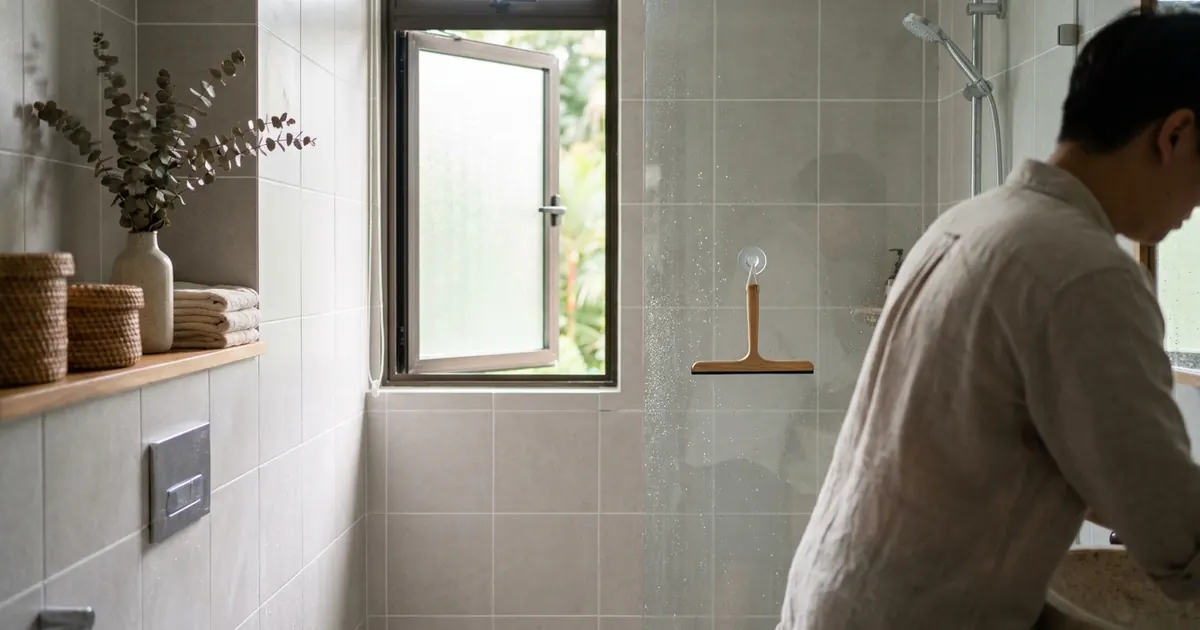
The way to keep bathroom grout clean in a Singapore home is to stop water and soap from sitting on it. Squeegee the tiles and glass after the last shower of the day, keep air moving through the room, and give the grout a proper scrub with a stiff brush and a bathroom cleaner once a week. Most stubborn grime and mould starts in bathrooms that never fully dry.
This guide covers why bathrooms get grimy so quickly here, a two-minute daily habit, a weekly routine step by step, how to deal with grout, soap scum and limescale, and what to do about a smelly floor trap.
Why bathrooms get grimy faster here
The Meteorological Service Singapore (MSS) puts the mean annual relative humidity at around 82%. It often goes above 90% in the early morning and can reach 100% during long spells of rain. In air that damp, a bathroom that was showered in at 7am can still be wet at lunchtime.
Water that sits on tiles leaves minerals behind as white marks and limescale. Soap and body oils mix with it to form a grey film of soap scum. Grout and silicone sealant, which are slightly porous, hold on to that moisture, and that is where dark mould spots take hold.
So the single biggest improvement is not a stronger product. It is getting the room dry faster.
A two-minute daily habit
After the last shower of the day:
- Squeegee the shower glass and the wall tiles from top to bottom.
- Hang towels and the bath mat to dry, ideally outside the bathroom.
- Leave the door open, or run the exhaust fan, so damp air can escape.
- Pull hair out of the drain cover before it builds into a clump.
That is it. It keeps the weekly clean short, and it does more against mould than a stronger spray would.
The weekly clean, step by step
Open the window or switch on the exhaust fan before you start. The National Environment Agency (NEA) recommends ventilating a home during and after cleaning and disinfection. Put on rubber gloves.
- Clear the surfaces. Move bottles and toothbrush cups off the counter and out of the shower.
- Apply the bathroom cleaner to the shower walls, glass and fittings, and toilet cleaner under the rim of the bowl. Leave both for the time the label gives. Letting the product work saves scrubbing.
- Clean the basin and counter. Use a detail brush or an old toothbrush around the tap base, where limescale collects.
- Scrub the shower. Work along the grout lines with a stiff brush. Use a non-scratch pad for soap scum on glass and fittings.
- Rinse everything with plenty of water, then squeegee the glass.
- Clean the toilet. Brush the bowl, then wipe the seat, the hinges, the outside of the bowl, the base and the underside of the seat. Wipe the bidet spray and its hose.
- Clear the drain cover of hair and rinse it.
- Do the floor last, working from the far corner towards the door, including the corners and around the drain.
- Finish with the mirror and glass, using a dry, lint-free cloth so they are streak-free.
- Empty the bin and put in a new liner.
Keep one cloth colour for the bathroom only and never take it into the kitchen. Our guide to the supplies to have ready explains colour-coded cloths and which products suit which surfaces.
Grout, soap scum and limescale
Grout
Most grout comes clean with a stiff brush, a bathroom cleaner and some patience. Brush along each line rather than across the tiles, rinse well, and dry it. For dark mould spots, use a product made for mould or a bleach-based cleaner, diluted exactly as its label says, with the room well ventilated. Bleach can lighten coloured grout, so test a small hidden patch first.
If grout stays dark after a proper clean, the stain has gone into the grout itself. At that point regrouting, or a grout sealer after a deep clean, is the fix. Black spots under the surface of silicone sealant around the shower tray or bathtub cannot be scrubbed out either; the silicone needs to be cut out and replaced.
Soap scum on glass
Soap scum is easiest to prevent with the daily squeegee. To remove build-up, spray the bathroom cleaner, leave it for the label's time, and work it with a non-scratch pad. Avoid gritty powders on glass, which leave fine scratches that hold more grime later.
Limescale on taps and shower heads
White crust on fittings is mineral build-up from water. A limescale remover used as the label directs will lift it, followed by a thorough rinse and a dry buff. Keep acidic limescale products away from marble and other natural stone, which they can etch.
Floor trap smells
The floor trap is the drain in the bathroom floor. It holds a small pool of water in a bend, and that water seal is what stops smells coming up from the pipes. In a bathroom that is rarely used, such as a guest or helper's bathroom, the water evaporates and the smell arrives.
- Pour a jug of water down each floor trap every week or so in rooms you do not use daily.
- Lift the cover and clean it. Hair and soap build-up around the cover can smell on their own.
- Check for other sources. Damp towels, a bath mat that never dries, and a blocked basin waste all smell similar.
If the smell stays after the trap is full and clean, the problem may be in the pipes, and it is time to call a plumber.
Safety: one product at a time
Bathrooms are small rooms where fumes build up quickly, so a few habits matter:
- Never mix products. NEA advises not mixing different disinfectant products, and using them in a well-ventilated area. Do not pour toilet cleaner and another cleaner into the bowl one after the other.
- Rinse between products. If you switch products on the same surface, rinse it with water first.
- Read the label and use the product as it directs. NEA also advises avoiding contact with eyes and skin, which is what the gloves are for.
- Keep products out of reach of children and put them away straight after cleaning.
How it works with HomeMaster
Bathrooms are step one of the written 75-point standard our cleaners work to. The checkpoints include a streak-free mirror under direct light, shower walls, grout and glass free of soap scum, fittings free of limescale, a drain cover free of hair, and a toilet clean inside, outside and underneath. We explain the whole standard in our guide to the 75-point cleaning checklist.
If you have two or three bathrooms, or grout that has been left for months, tell Helen, our AI assistant on WhatsApp, and book enough time; bathrooms decide the length of a visit more than floor area does. The home cleaning checklist shows what each room covers. Your cleaner brings the cloths, squeegee, scrub pad, detail brushes and a multi-purpose cleaner; you provide the vacuum and mop. If you want a particular bathroom or limescale product used, or your bathroom has natural stone, leave the right product out and say so.
Frequently asked questions
How often should I clean bathroom grout?
Give it a proper scrub once a week, alongside the rest of the bathroom. In a shower used by several people, a quick brush of the lowest grout lines midweek helps. Squeegeeing the tiles after the last shower each day means the weekly scrub stays short.
Why does my bathroom still smell after cleaning?
A common cause is a floor trap that has dried out, which lets drain smells up. Pour water into it and clean the cover. Damp towels, a wet bath mat and hair in the basin waste can also smell. If the odour stays with the trap full and clean, call a plumber.
Can I use bleach on grout?
You can use a bleach-based cleaner on mould spots if you dilute it exactly as the label says, ventilate the room and never mix it with another product. NEA advises against mixing disinfectant products. Bleach can lighten coloured grout, so test a hidden patch first.
Should I leave the bathroom door open after a shower?
Yes, if you can. Letting damp air out, or running the exhaust fan for a while, helps the tiles, grout and towels dry. In Singapore's humidity, a closed bathroom can stay wet for hours, which is what lets soap scum and mould build up.
Sources
- Climate of Singapore, Meteorological Service Singapore
- List of Active Ingredients for General Disinfection, National Environment Agency
- Guidelines for Cleaning and Disinfecting Residences, National Environment Agency
Need a hand at home?
Tell Helen what you need on WhatsApp. She replies with real open times and the exact price, GST included, and weekends cost the same as weekdays.