What supplies to have ready before your cleaner arrives
Have a working vacuum and mop ready, plus any special product your surfaces need. With HomeMaster, your cleaner brings the cloths, brushes and cleaner.
By the HomeMaster team · · Updated · 5 min read
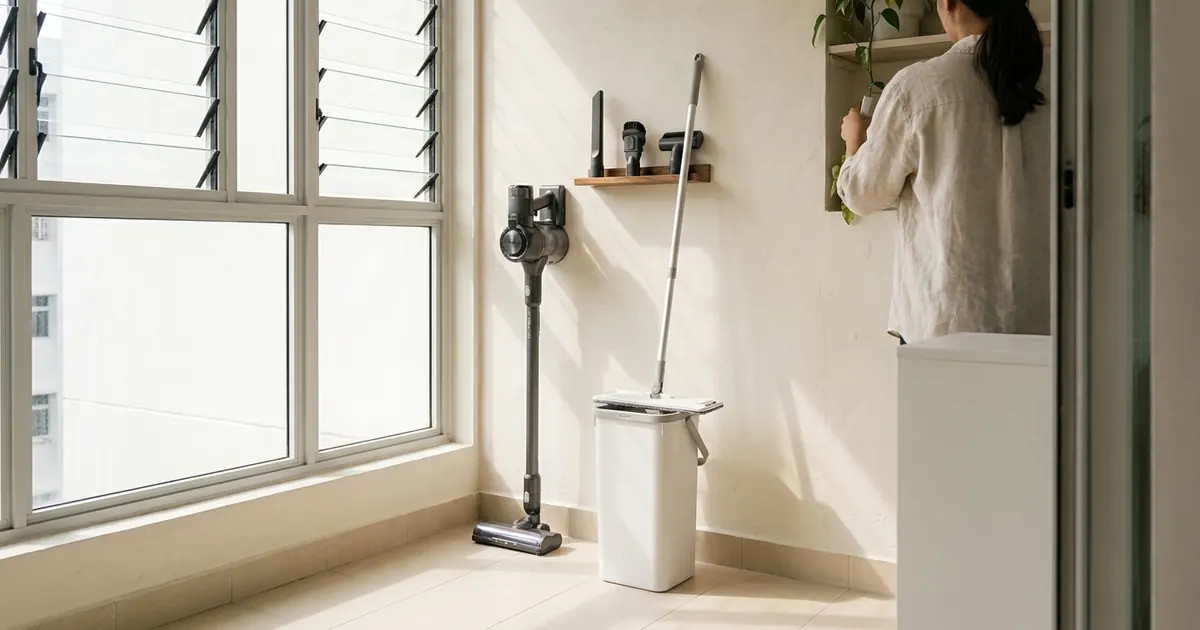
Have a working vacuum cleaner with its attachments and a mop ready, plus any special product your surfaces need, such as a natural stone cleaner or a glass hob cleaner. With HomeMaster, those are the only things you provide: your cleaner brings the cloths, the brushes and scrub pad, bin liners and a multi-purpose cleaner.
Arrangements differ between services, so if you use someone else, ask exactly what they bring. This guide covers what to have ready, what a HomeMaster cleaner brings, when to leave out a product of your own, and how to store and check things so a visit never stalls halfway.
What you need to have ready
Two things, always: a vacuum cleaner and a mop. They are the tools the whole clean depends on, and with HomeMaster a session cannot be completed without them.
| Item | What to check |
|---|---|
| Vacuum cleaner | It works, is charged or has a working cord, and the bag or bin has been emptied |
| Vacuum attachments | A crevice tool for corners and skirting, and a brush or upholstery head for sofas, mattresses and fabric |
| Mop | A clean head or washable pads, and a bucket if it is the kind that needs one |
| Floor cleaner, if you use one | A product that suits your floor, left next to the mop |
A vacuum that dies after twenty minutes, or a mop head that has seen better days, costs cleaning time you are paying for. Check both the evening before, especially before a first visit.
A few optional extras help if they apply to your home:
- An extendable duster for fan blades and high corners, so they can be reached from the floor.
- A specialist product for any surface that needs one (see below), left out and labelled.
- Fresh bed linen laid on each bed if you want the beds changed.
What your cleaner brings
With HomeMaster, your cleaner arrives with a kit for everything else in a normal visit:
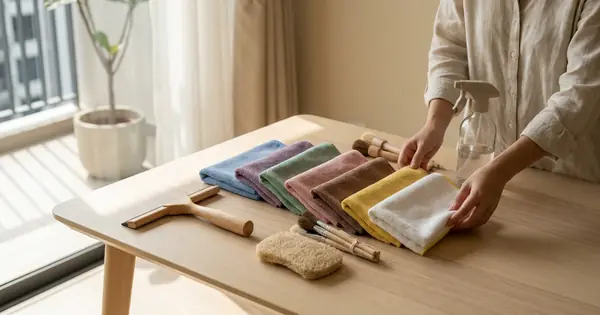
- Seven colour-coded cloths, with separate cloths for rooms, toilets, the kitchen and exterior surfaces, so a bathroom cloth never touches a kitchen counter.
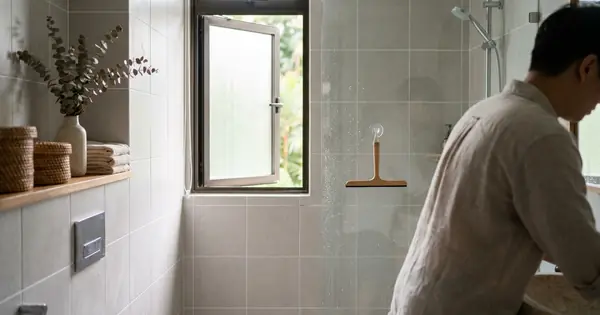
- A window squeegee for glass panels, windows and shower screens.
- A non-scratch scrub pad for soap scum, grease and stubborn residue.
- A detail brush set for tap bases, grout lines, shower tracks and window tracks.
- Trash bags to replace the liners in your bins.
- A multi-purpose cleaner for general surface cleaning.
The cloths follow a simple rule, one cloth for one zone, which is the heart of the written standard our cleaners are trained on. We explain it in our guide to the 75-point cleaning checklist.
When to leave out a product of your own
A multi-purpose cleaner handles most everyday surfaces, but not every surface. A product that is perfectly fine on bathroom tiles can mark stone or swell timber. If your home has any of the surfaces below, leave the right product out, labelled, and tell your cleaner which surface it is for.
| Surface | Leave out | Keep away from it |
|---|---|---|
| Marble, limestone, terrazzo | A cleaner labelled pH neutral or safe for natural stone | Acidic products such as vinegar, lemon and many limescale removers, which can etch the surface; gritty powders |
| Granite and quartz counters | A stone-safe cleaner, if the maker recommends one | Abrasive pads; strong chemicals the maker's guide warns against |
| Sealed timber, parquet, laminate and vinyl floors | A cleaner made for that floor, next to the mop | Soaking the floor, standing water and steam unless the maker allows it |
| Glass, ceramic and induction hobs | A hob cleaner made for glass, and a hob scraper if you use one | Abrasive pads that scratch |
| Stainless steel appliances | A steel cleaner, if you like a streak-free finish | Scouring pads and powders |
| Heavily used kitchen | A kitchen degreaser safe for your surfaces | Mixing it with any other product |
If you are not sure what your counters or floors are made of, the renovation contractor's handover notes or the manufacturer's care guide will tell you. When in doubt, test a product on a hidden spot first.
Colour coding at home
The reason for separate cloths is hygiene: the cloth that wiped around the toilet should never wipe the table where your family eats. It is worth copying for your own cleaning between visits. Give each zone its own colour and never swap them, for example one for the bathroom, one for the kitchen, one for general surfaces and one for glass.
Wash microfibre cloths after use, skip the fabric softener (it clogs the fibres), and let them dry completely. The Meteorological Service Singapore puts the country's mean annual relative humidity at around 82%, so a damp cloth left in a bucket starts to smell quickly.
Storing your own products safely
Whatever you keep at home for your own cleaning, and any specialist product you leave out for a visit, a few rules keep the cupboard safe:
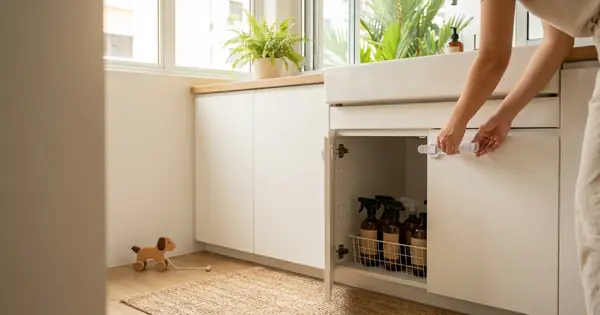
- Keep products in their original containers. Singapore's Consumer Product Safety Office advises against reusing empty containers or repacking chemicals into other containers, because it can lead to mistaken use or someone swallowing the contents.
- Lock it if there are children at home. The same office advises storing chemicals in a cabinet children cannot reach, kept locked, and not leaving chemicals unattended during use.
- Never mix products. The National Environment Agency (NEA) advises not mixing different disinfectant products and using them in a well-ventilated area. One product at a time on a surface is the safe habit.
A quick check before each visit
- The vacuum is charged, emptied and has its attachments.
- The mop head or pads are clean, and replaced if they have stopped absorbing or smell even after washing.
- Any specialist product is out, labelled and not nearly empty. Replace a bottle when it is about a quarter full, not when it runs out.
- Clutter is off the surfaces and floors you want cleaned.
How it works with HomeMaster
For home cleaning with HomeMaster, you provide a working vacuum cleaner and mop, and your cleaner brings the rest of the kit listed above. If there is a product you want used, or a surface that must not get a particular product, tell Helen, our AI assistant on WhatsApp, when you book, so it reaches your cleaner before the visit.
Our home cleaning checklist lists what each room covers, and our guide to what a home cleaner does covers the jobs that sit outside a normal visit.
Frequently asked questions
Do part-time cleaners in Singapore bring their own supplies?
It depends on the service, so ask any provider for their list. With HomeMaster, you provide a working vacuum cleaner and mop, and your cleaner brings seven colour-coded cloths, a squeegee, a non-scratch scrub pad, a detail brush set, bin liners and a multi-purpose cleaner.
What if my vacuum or mop is not working on the day?
With HomeMaster, a session cannot be completed without a working vacuum cleaner and mop, so check both the evening before. If one has broken, tell Helen before the visit rather than on the day, so the booking can be sorted out with notice.
Should I leave out my own cleaning products?
Only where your surfaces need something specific. The cleaner's multi-purpose cleaner handles general surfaces, but natural stone, sealed timber floors and glass hobs can need their own product. Leave it out, labelled, and tell your cleaner or Helen which surface it is for.
Is vinegar safe to clean with?
It works on some jobs, such as glass, but it is acidic, so keep it away from marble, limestone and terrazzo, which it can etch. Never combine it with another product: NEA advises against mixing disinfectant products. If you are unsure about a surface, test on a hidden spot or check the manufacturer's care guide.
Sources
- Safety Tips for Storing Household Chemicals, Consumer Product Safety Office
- List of Active Ingredients for General Disinfection, National Environment Agency
- Climate of Singapore, Meteorological Service Singapore
Need a hand at home?
Tell Helen what you need on WhatsApp. She replies with real open times and the exact price, GST included, and weekends cost the same as weekdays.