How to remove and prevent mould in a Singapore home
Mould grows where damp air meets still, closed-up spaces. How to clean it safely, stop it coming back, and tell when a patch is really a leak from upstairs.
By the HomeMaster team · · Updated · 5 min read
To get rid of mould, clean it off hard surfaces with detergent and water, dry the area completely, and then fix whatever is keeping it damp. Airflow and drying do more to stop mould coming back than stronger chemicals. If a patch keeps returning, spreads on a ceiling or feels wet to the touch, look for a leak before you reach for the bleach.
This matters more in Singapore than in drier places, and the reason is in the air itself. The rest of this guide covers where mould hides, how to clean it safely, how to keep it away, and when it stops being a cleaning job.
Why Singapore homes grow mould
Mould needs moisture, and Singapore supplies plenty. The Meteorological Service Singapore records a mean annual relative humidity of around 82%, above 90% in the mornings before sunrise, and often 100% during long spells of rain. November and December have the highest average humidity of the year, and November to January is the wettest stretch.
Damp air on its own is not the whole story. Mould takes hold where moisture settles and stays: on cool surfaces where water condenses, in cupboards that are never opened, and in corners where air does not move. NEA's ventilation guidance for buildings notes the same risk at a larger scale, warning that bringing in too much humid outdoor air can cause condensation and mould growth.
Mould is more than a stain. HealthHub lists it among the common allergens behind allergic rhinitis. If anyone at home has allergies or asthma, keeping it down is worth the effort.
Where mould hides
Check these spots, especially after a wet week:
- Bathroom ceilings and the corners above the shower
- Silicone sealant around the basin, bathtub and shower screen, and grout lines
- Wardrobes, particularly those built against an outside wall or rarely opened
- Leather bags, shoes and belts stored in closed cupboards
- Behind beds, sofas and cabinets pushed tight against a wall
- Window frames, rubber seals and sliding window tracks
- Curtains and blinds that sit against the glass
- Mattresses on the floor or on solid bases with no airflow underneath
- The aircon louvres, and a musty smell when the unit starts
That last one is growth on the aircon's coil, which stays damp almost constantly. A filter clean does not reach it; a chemical wash is what removes it.
For bathroom grout and soap scum in particular, see our bathroom cleaning guide for humid homes.
How to clean mould safely
For small patches on hard, non-porous surfaces such as tiles, glass, sealant or painted walls:
- Open the windows or switch on a fan. NEA recommends ventilating the home during and after cleaning with disinfecting products.
- Put on rubber gloves, and keep children and pets out of the room.
- Wipe or scrub the patch with detergent and warm water. Wipe rather than dry-brush, so loose growth is not sent into the air.
- Rinse with clean water and dry the surface completely with a fresh cloth.
- If marks remain, household bleach diluted exactly as its label says can be used on surfaces that tolerate it. Test a hidden spot first, because bleach can discolour fabric, grout and some finishes.
NEA's points for using any disinfectant are simple: read the label and follow it, avoid contact with eyes and skin, keep products away from children, and do not mix different products. Use them only in a well-ventilated space. NEA also notes that chlorine products are corrosive to metals, so wipe bleach residue off taps, hinges and fittings with a wet cloth after use.
Soft and porous items are harder. Wash mouldy clothes, curtains and fabric covers and dry them fully. For leather, wipe the surface gently with a damp cloth, let it dry in an airy spot out of direct heat, and store it where air can reach it. Mould deep inside a mattress, upholstery or a water-damaged ceiling board often cannot be cleaned out, and the honest answer is replacement.
Stopping it coming back
Prevention is about moisture and airflow, every day:
- Let the air move. NEA's advice for homes is to open doors and windows to improve ventilation, and to use fans to help air circulate.
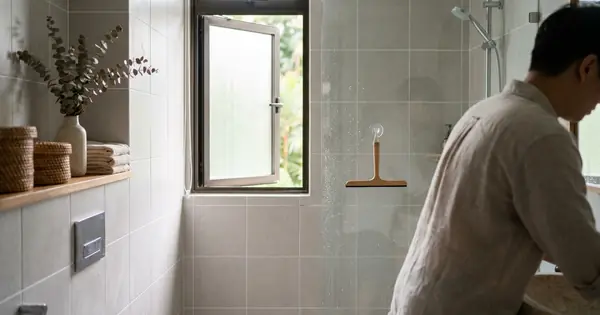
- Dry the bathroom after use. Run the exhaust fan or open the window, squeegee the shower screen and hang towels to dry outside the bathroom where possible.
- Treat wardrobes gently. Never put away clothes that are even slightly damp. Leave a small gap between the wardrobe and the wall, avoid packing it tight, open the doors on dry days, and use moisture absorbers, emptying them when full.
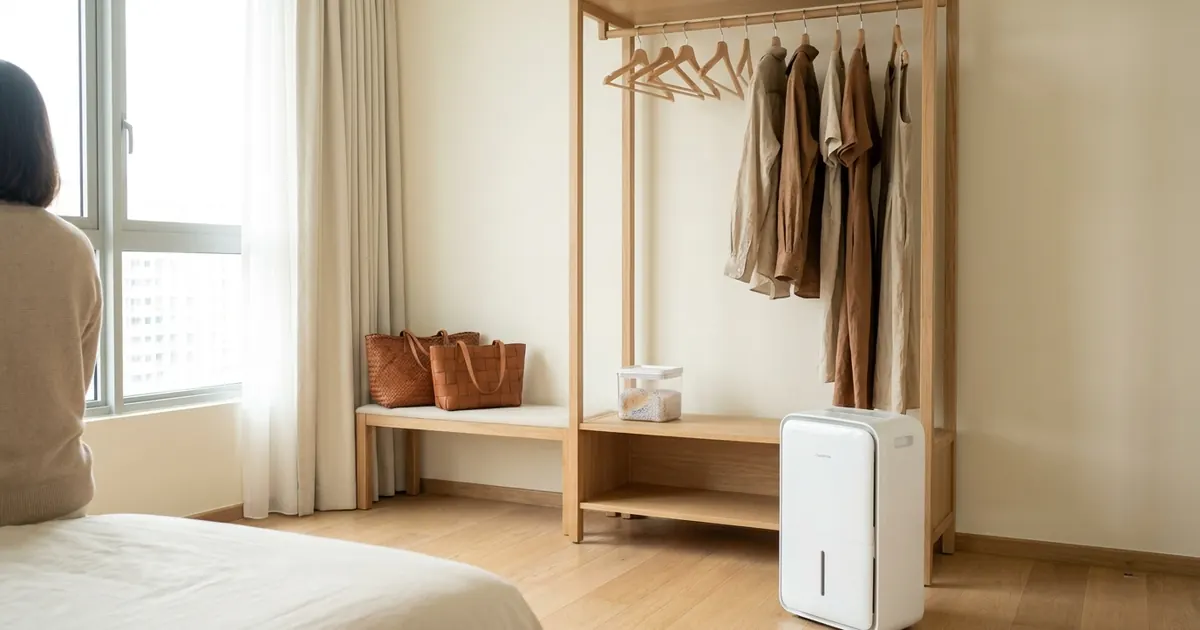
- Take on the dampest rooms. A dehumidifier, or the dry mode that many aircons have, helps in a room that always feels clammy.
- Keep stored items breathing. Store leather and shoes where air can circulate, rather than sealed in plastic.
- Fix drips quickly. A dripping pipe, a leaking aircon or a blocked floor trap feeds mould in the cabinet or wall next to it.
When mould means a leak
Some mould is not a cleaning problem at all. HDB explains that ceiling leaks happen when water from the flat above seeps through the concrete floor slab, usually because the waterproof membrane and screed have worn out over time. It is common in older blocks and typically affects toilets and bathrooms. HDB warns that untreated ceiling leaks may damage electrical items and cause mould growth, and asks residents to deal with them promptly.
Signs that you are looking at a leak rather than condensation: a patch that grows, stays wet to the touch, shows ring-shaped stains or peeling paint, or gets worse after the flat above uses its bathroom.
HDB's steps for a leak between two flats are to approach the upstairs neighbour, agree on a time for a contractor to confirm the source, engage the contractor together and share the repair cost. If you live on the top floor, the leak comes from the roof, which is common property, so contact your Town Council.
HDB also suggests two habits that help prevent ceiling leaks in the first place: use non-corrosive detergents when washing toilets and bathrooms, and mop the kitchen floor instead of washing it down, because there is no waterproofing membrane under kitchen floor tiles.
What a regular cleaner can and cannot do
A regular clean is one of the simplest ways to keep mould from settling in. With HomeMaster, a standard visit covers bathrooms, bedrooms, the kitchen, living areas and the balcony against a written standard, including tiles, grout, glass and drains; see the full home cleaning checklist. Tell Helen, our AI assistant on WhatsApp, which spots worry you, such as the shower corners or a musty wardrobe, so your cleaner knows where to spend extra time.
What a cleaner cannot do is fix the cause. Leaks, cracked sealant, a broken exhaust fan and a wall that stays damp need a contractor or a plumber, and mould deep in porous materials needs replacing, not scrubbing. If a spot keeps coming back after a proper clean, that is your sign to look further. More on how a visit works is on our home cleaning page.
Frequently asked questions
Is it safe to use bleach on mould?
On hard, non-porous surfaces, household bleach diluted as the label directs can be used. Ventilate the room, wear gloves, keep children away and never mix bleach with any other product, as NEA advises for all disinfectants. Wipe residue off metal fittings afterwards, since chlorine is corrosive to metals, and test a hidden spot first.
Why does my wardrobe smell musty?
A closed wardrobe traps still, humid air, and it gets worse if clothes go in slightly damp or the wardrobe sits against an outside wall. Empty and wipe it, let everything dry fully, leave a small gap from the wall, avoid packing it tight and use moisture absorbers, emptying them when they fill.
Who pays to fix a ceiling leak in an HDB flat?
HDB says flat owners are responsible for their own flats, including floor and ceiling slabs. For a leak between two flats, the owners above and below arrange the repair together and split the cost. For top-floor flats the leak usually comes from the roof, which the Town Council maintains, so contact the Town Council.
Can my cleaner remove mould?
Surface mould on hard surfaces, such as tiles, grout, sealant, glass and window frames, can be cleaned as part of a normal session. A cleaner cannot fix what causes it, such as a leak or poor ventilation, and cannot rescue mould deep inside porous materials like ceiling boards or mattresses.
Sources
- Climate of Singapore, Meteorological Service Singapore
- Preventing and Fixing Ceiling Leaks in HDB Flats, Housing & Development Board
- Updated Guidance on Improving Ventilation and Indoor Air Quality in Buildings, National Environment Agency
- List of Active Ingredients for General Disinfection, National Environment Agency
- Guidelines for Cleaning and Disinfecting Residences, National Environment Agency
- Allergic Rhinitis, HealthHub (Pharmaceutical Society of Singapore)
Need a hand at home?
Tell Helen what you need on WhatsApp. She replies with real open times and the exact price, GST included, and weekends cost the same as weekdays.