Monsoon season in Singapore: how to prepare your home
The Northeast Monsoon runs from December to early March, and November to January is the wettest stretch. How to keep your home dry, clean and ready for it.
By the HomeMaster team · · Updated · 5 min read
Singapore's Northeast Monsoon runs from December to early March, and November to January brings the most rain of the year. To get your home ready, check that windows close and drain properly, clear floor traps and drains, set up a way to dry laundry indoors, and keep an eye on ceilings and wardrobes for damp. An hour or two of checks in November saves weeks of musty cupboards later.
Here is what the season brings, and a simple plan for before and during it.
What the season brings
The Meteorological Service Singapore divides the year into two monsoons with inter-monsoon periods between them. The Northeast Monsoon runs from December to early March. In its early, wet phase, usually December to early January, monsoon surges bring widespread, continuous moderate to heavy rain, at times with winds of 25 to 35 km/h. The later part of the season, from late January to early March, is windy and relatively dry.
November sits in the inter-monsoon period, when thunderstorms, at times severe, build in the afternoon and early evening. On MSS's long-term averages, December is the wettest month at 331.9 mm of rain, and November and December each average 19 rain days.
For a home, that means three things:
- Humidity stays high. MSS notes that relative humidity frequently reaches 100% during prolonged rain. Clothes dry slowly, wardrobes turn musty and mould gets its chance.
- Rain comes in sideways. Winds are stronger in the Northeast Monsoon than at other times of year, so windows and balcony doors are tested.
- Drains work harder. Floor traps, balcony outlets and compound drains all carry more water.
Before the rain: a checklist for one weekend
- Windows. HDB asks owners to check their windows every 6 months to make sure they work smoothly and have no loose or worn-out parts. Close each one fully, check the rubber seals, and clear the bottom tracks of sliding windows, where many designs have small slots to let rainwater out.
- Floor traps. HDB's advice is to keep the grating closed so hair and solids do not choke the trap, and to avoid pouring cooking oil or food waste down it. Clear any slow-draining trap now, before a storm tests it.
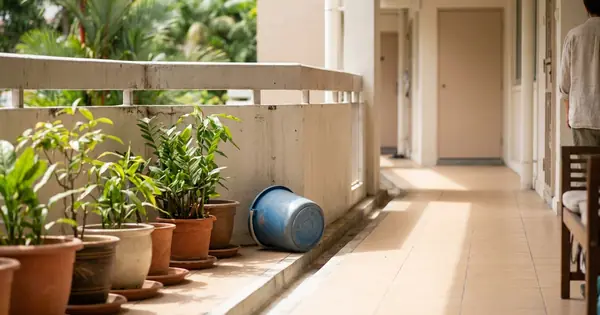
- Balcony and compound drains. Clear leaves and debris from balcony and planter outlets. If you have a landed home in a flood-prone area, PUB's advice is to keep the drains within your compound well maintained and free of chokes, and any flood barriers in working order.
- Ceilings and walls. Look for existing stains and take a photo, so you can tell later whether a patch is growing.
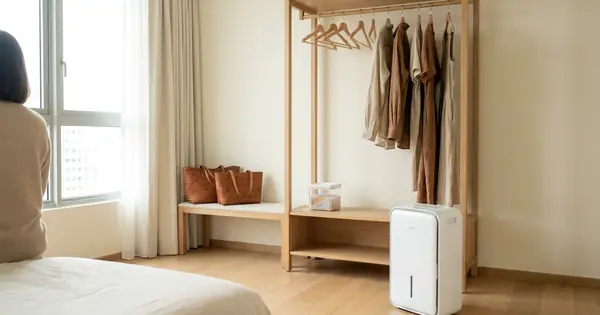
- Wardrobes. Clear some space so air can move, put in fresh moisture absorbers, and move anything leather out of sealed bags.
- Supplies. A drying rack, a fan for the laundry area, spare microfibre cloths and, if a room always feels clammy, a dehumidifier.
Drying laundry indoors without the musty smell
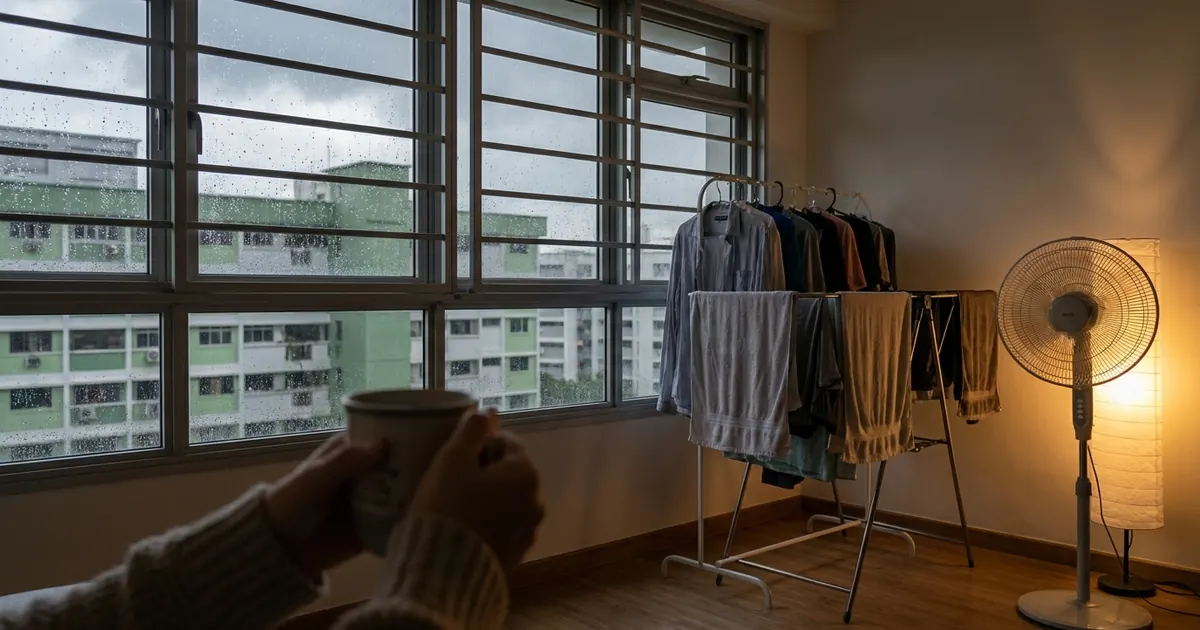
Laundry that never quite dries is the classic monsoon headache, and most of the fix is airflow:
- Run the full spin cycle. As NEA points out, spinning takes moisture out of a load using less energy than heat drying.
- Hang smaller loads with space between items, rather than one packed rack.
- Point a fan across the rack, or dry in a closed room with a dehumidifier running.
- Take laundry out of the machine as soon as the cycle ends.
- If you use a dryer, clean the lint filter after every load, as NEA recommends, and dry full loads where you can.
Many aircons also have a dry or dehumidify mode, often shown with a water drop symbol. Check your manual for how yours works.
Keeping damp and mould down through the season
Between showers, let the home breathe. NEA's advice for homes is to open doors and windows to improve ventilation and to use fans to help the air circulate. Close them again when rain starts blowing in.
A few habits make a real difference:
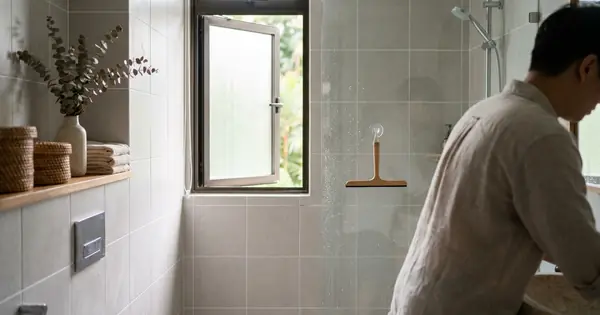
- Run the bathroom exhaust fan or open the window after every shower
- Wipe condensation off windows in aircon rooms in the morning
- Mop with a well-wrung mop so floors dry quickly, and dry any puddles by the door
- Keep a tray for wet umbrellas and shoes at the entrance
- Never put clothes away until they are fully dry
If mould does appear, our guide to mould in Singapore homes covers where it hides, how to clean it safely and when it points to a leak. Standing water after rain is also where mosquitoes breed, so our dengue home checks are worth a look at the same time.
Leaks, floods and electrical safety
Ceiling leaks. HDB explains that ceiling leaks usually come from the flat above, through a floor slab whose waterproofing has worn with age, and typically show up under toilets and bathrooms. If a stain appears or grows, speak to your upstairs neighbour early; HDB's guidance is that the two owners engage a contractor together and share the repair. In a top-floor flat, the leak comes from the roof, so contact your Town Council.
Flash floods. If you live or work in a flood-prone area, PUB suggests subscribing to its PUB Flood Alerts Telegram channel or using the myENV app for updates.
Water and electricity. PUB's safety advice is not to touch electric switches or appliances if you are wet or standing in water, and to turn off all main switches and disconnect appliances if you need to evacuate. Keep extension cords and power strips off floors that could get wet.
Where a cleaner helps during the monsoon
Wet weeks bring more mud through the door, slower-drying floors and bathrooms that stay damp. A regular clean keeps on top of all three: floors mopped and dried, bathrooms scrubbed before grime builds up, window tracks and sills wiped, and laundry handled on request within the session time. Our weekly or fortnightly cleaning guide can help you decide how often.
With HomeMaster, you tell Helen, our AI assistant on WhatsApp, what you need in a sentence, and she replies with real open times and the exact price. A regular 3 to 4 hour slot is from $20/hour, GST included, and a rainy Saturday costs the same as a weekday. More on what a visit covers is on our home cleaning page.
Frequently asked questions
When is the monsoon season in Singapore?
According to the Meteorological Service Singapore, the Northeast Monsoon runs from December to early March and the Southwest Monsoon from June to September. The inter-monsoon periods fall in late March to May and in October to November. Rainfall is highest from November to January, during the wet phase of the Northeast Monsoon.
How do I stop clothes smelling musty when I dry them indoors?
Give them airflow and time. Use the full spin cycle, hang smaller loads with gaps between items, and point a fan across the rack or run a dehumidifier in a closed room. Take laundry out of the machine as soon as it finishes, and never fold anything away until it is completely dry.
What should I do if rain gets in through my window?
Close it fully, dry the sill and floor, and check whether the bottom track is blocked with dirt, which stops water draining away. Look at the rubber seals too. If the frame is loose or parts are worn, HDB advises engaging a BCA-approved window contractor listed with HDB to repair or replace it.
Sources
- Climate of Singapore, Meteorological Service Singapore
- Keeping Windows of HDB Flats in Good Condition, Housing & Development Board
- Floor Traps: Home Care Guide, Housing & Development Board
- Preventing and Fixing Ceiling Leaks in HDB Flats, Housing & Development Board
- Flood Safety Tips, PUB, Singapore's National Water Agency
- Energy Saving Tips by Appliance, National Environment Agency
- Updated Guidance on Improving Ventilation and Indoor Air Quality in Buildings, National Environment Agency
Need a hand at home?
Tell Helen what you need on WhatsApp. She replies with real open times and the exact price, GST included, and weekends cost the same as weekdays.