Reducing dust mites and allergens in a Singapore home
HealthHub names dust mites as Singapore's most common allergen. A practical cleaning routine for bedding, floors, soft furnishings and aircon filters.
By the HomeMaster team · · Updated · 5 min read
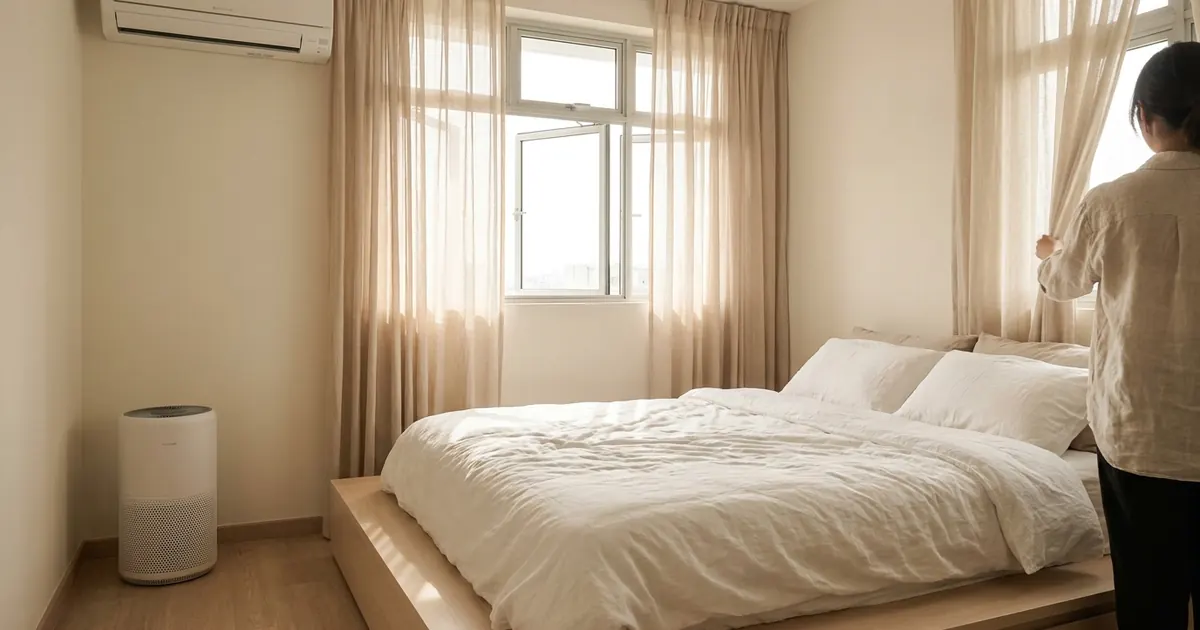
The most effective cleaning for allergies starts in the bedroom: wash bedding in hot water every one to two weeks, put dust mite proof covers on the mattress and pillows, and cut down on rugs, soft toys and cushions. Then clean in a way that lifts dust instead of stirring it up, with damp cloths and a mop, and keep aircon filters clean.
This is a cleaning guide, not medical advice. If you or your child has allergies or asthma, follow the plan your doctor gives you. The health points below come from HealthHub, the government's health information site, and we have kept to what it says.
What you are cleaning against
HealthHub lists the common allergens behind allergic rhinitis as dust mites, animal dander, insect droppings, mould and pollen, and says dust mites are the most common allergen for Singapore. For childhood asthma, its list of common triggers includes house dust mite allergy, cigarette smoke, pollution including the haze, and viral infections such as colds.
Cleaning cannot do much about colds or pollen. It can do a lot about the rest. Dust, dander, droppings and mould all collect on surfaces, in fabric and on filters, which is exactly where a good routine reaches.
Start with the bedroom
Start where you sleep. HealthHub's advice for reducing allergens includes:
- Covers. Encase mattresses, pillows and bolsters in dust mite proof covers.
- Hot washes. Wash bedding in hot water, 55 to 60°C, frequently. HealthHub's asthma guidance for children puts it at 60°C every one to two weeks. Check the care label first, since not every fabric can take it.
- Less on the bed. Keep stuffed toys and cushions to a minimum, because they collect dust.
- Less on the floor. Remove rugs and carpets where you can. For a child with asthma, HealthHub also suggests taking curtains and soft toys out of the bedroom.
- Pets out. Keep pets out of the bedroom and off the furniture.
Clutter matters too. Every open shelf of books and ornaments is another surface for dust, so closed storage makes weekly cleaning quicker and more thorough.
Clean without spreading dust
HealthHub recommends vacuuming and mopping frequently to get rid of dust mites and insect droppings, and taking steps to avoid stirring up dust. Its haze advice adds a useful detail: wet-cleaning methods such as mopping and wiping generally do not produce dust, unlike dry dusting or vacuuming.
Put together, that gives a simple method:
- Dust with a damp microfibre cloth, not a feather duster, and rinse it often.
- Work from high to low: fan blades, tops of wardrobes and shelves, then surfaces, then floors.
- Vacuum, then mop, so the mop picks up what the vacuum stirred.
- Empty the vacuum bin or bag outside the bedroom, ideally outdoors.
- Wash cloths and mop heads after each clean rather than reusing them dirty.
If you can, clean when the person with allergies or asthma is out of the home, and air the rooms afterwards when the outdoor air is good.
Mould, pests, smoke and haze
Mould is on HealthHub's list of common allergens, and Singapore's humidity gives it every chance. Our guide to mould in Singapore homes covers cleaning it safely and stopping it coming back.
Cockroaches leave droppings, which HealthHub also lists, and its asthma advice is to keep good pest control at home. Keep food sealed, crumbs off floors and bins covered. For an infestation, call a pest control company; it is not a cleaning job.
Cigarette smoke is a common asthma trigger. HealthHub suggests any smoker in the family smoke outside the home and change their clothes afterwards.
Haze is on the trigger list too, and HealthHub advises keeping windows closed during a haze. Our haze guide covers keeping particles out and cleaning up after.
Aircon, fans and air purifiers
An aircon draws the room's air through its filter and over its coil again and again, so keeping both clean is part of an allergy routine. NEA's advice is to check the aircon filter once a month and clean or replace it when necessary. A musty smell when the unit starts usually means growth on the damp coil, which a filter clean does not reach and a chemical wash does. For routine upkeep, a general aircon service every 3 to 4 months keeps the filters, drainage and surfaces clean.
Ceiling and standing fans collect a layer of dust on the blades and spread it when switched on, so wipe them with a damp cloth every week or two.
HealthHub suggests air purifiers with HEPA filters to remove allergens from your living environment. NEA's advice when buying one is to check its clean air delivery rate against the size of the room. A purifier works alongside the bedding and floor routine above, not instead of it.
A routine that works
| How often | What to do |
|---|---|
| Every week | Damp dust all surfaces, vacuum then mop the floors, wipe fan blades, vacuum the sofa |
| Every one to two weeks | Wash bedding in hot water, as the care label allows |
| Every month | Check and rinse aircon filters, wash cushion covers and throws |
| Every 3 to 4 months | Aircon general servicing for units in daily use |
Pets change the picture. If you have a dog or cat, our guide to cleaning with pets covers fur and dander in more detail.
How HomeMaster can help
A regular weekly or fortnightly clean takes the heavy dusting and mopping off your hands. Your cleaner can work while the person with allergies is out, and you do not need to be home. Bedding changes and laundry can be included on request within the session time.
Your cleaner brings a multi-purpose cleaner and colour-coded cloths, and you provide a working vacuum cleaner and mop, so a vacuum with a good filter is worth having. If a scent or product bothers someone at home, say so, and leave out the product you would rather be used. Tell Helen, our AI assistant on WhatsApp, about your home and what matters most, such as doing the bedrooms first, and she replies with real open times and the exact price. A regular 3 to 4 hour slot is from $20/hour, GST included. More on what each visit covers is on our home cleaning page.
Frequently asked questions
How often should I wash bedding to reduce dust mites?
HealthHub advises washing bedding in hot water, 55 to 60°C, frequently, and its guidance for children with asthma says 60°C every one to two weeks. Check the care label before washing at that temperature. Dust mite proof covers on the mattress, pillows and bolsters help between washes.
Is vacuuming bad for allergies?
No, HealthHub recommends vacuuming and mopping frequently. Its haze advice does note that vacuuming and dry dusting can raise dust, while mopping and wiping generally do not. So vacuum when the person with allergies is out, mop afterwards to catch what was stirred up, and empty the bin away from the bedroom.
Do air purifiers help with dust mites?
HealthHub lists air purifiers with HEPA filters among its ways to reduce allergens at home. Its advice starts with bedding, covers and floors, though, and a purifier sits alongside those rather than replacing them. When buying one, NEA suggests matching its clean air delivery rate to the size of the room.
Can a cleaner help if someone at home has asthma?
Yes, with the heavy dusting, mopping and bedding changes, ideally while that person is out of the home. If a product bothers them, tell us and leave out the one you would rather be used. A cleaner is not a substitute for medical advice; follow the plan your doctor has given you.
Sources
- Allergic Rhinitis, HealthHub (Pharmaceutical Society of Singapore)
- Asthma (Common Childhood Illnesses), HealthHub (Health Promotion Board)
- How to Protect Yourself Against the Haze, HealthHub (Ministry of Health)
- Energy Saving Tips by Appliance, National Environment Agency
- Air Cleaning Devices, National Environment Agency
Need a hand at home?
Tell Helen what you need on WhatsApp. She replies with real open times and the exact price, GST included, and weekends cost the same as weekdays.