A school holidays cleaning routine for homes with kids
The year-end school holidays run from 21 November to 31 December 2026. A 15-minute daily reset, chores by age and one extra clean keep the house under control.
By the HomeMaster team · · Updated · 5 min read
The Ministry of Education's year-end school holidays run from Saturday, 21 November to Thursday, 31 December 2026. Six weeks of children at home means more meals, more laundry and more of everything on the floor. What keeps a home under control is a short daily reset that the whole family does together, a few real chores for each child, and help booked for the weeks that get away from you.
Why the holidays feel messier
It is not your imagination. During term, the home is empty for a good part of the day. In the holidays, breakfast, lunch and snacks all happen at home, toys and craft projects stay out, friends come over, and the washing machine runs more often. Add year-end visitors and the house is working much harder than usual.
The answer is not to clean more on weekends. It is to stop mess from building up for days, so there is less to catch up on.
A daily reset that takes 15 minutes
Pick a fixed time, such as just before dinner or just before bath time, and set a timer. Everyone helps, and when the timer stops, you stop.
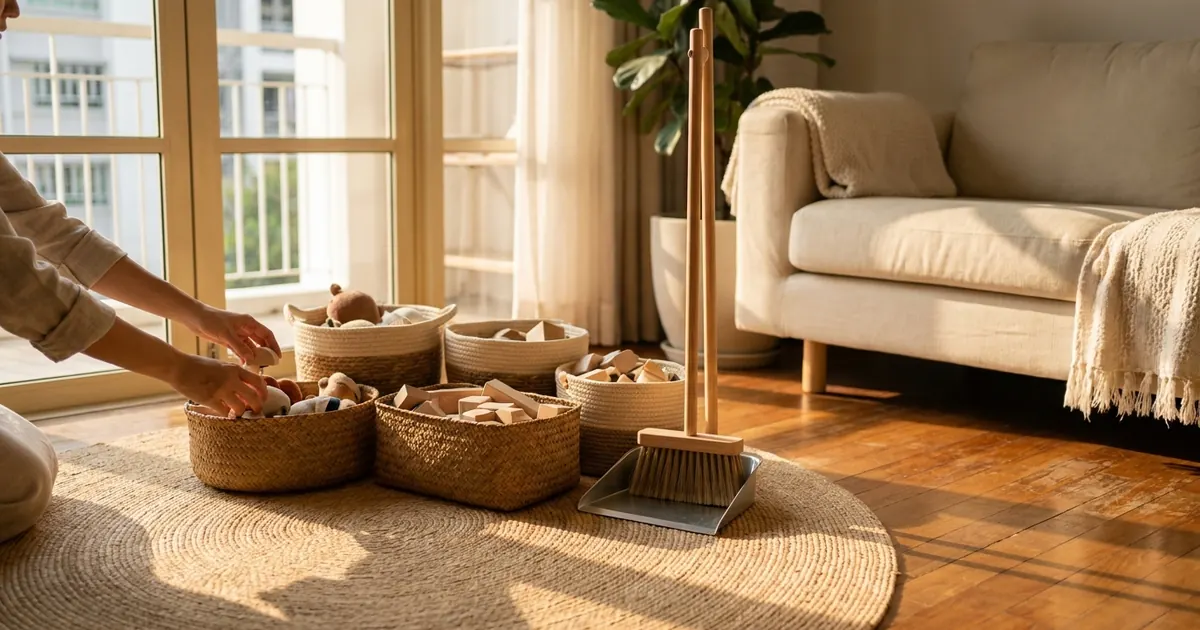
- Toys and books back to their homes. Low, open boxes and baskets work better than lids for young children.
- Surfaces cleared. The dining table, the coffee table and the kitchen counter back to empty.
- Floors picked up. Nothing left on the floor that would stop a quick sweep or vacuum.
- Laundry to the hamper. Every child takes their own clothes.
- Kitchen closed. Dishes washed or loaded, counters and hob wiped, the sink empty.
- Bins checked. Food rubbish out before it starts to smell or draw ants.
A five-minute morning version helps too: beds made, pyjamas away, breakfast things cleared.
Holiday mess: quick fixes
- Sticky floors: wash with warm water and your usual floor cleaner, then go over again with clean water, because leftover cleaner is often what makes a floor feel tacky.
- Crayon or pencil on painted walls: a barely damp cloth first; if that fails, a melamine sponge used gently, after testing a hidden spot, since it can dull matt paint.
- Play dough or slime on the floor: let it dry, then lift it off and vacuum. Wet, it smears.
- Glitter: vacuum first, then press a strip of tape or a damp cloth over what is left.
Chores by age
The Health Promotion Board's advice on HealthHub suggests that children aged 2 to 3 can put clothes in the laundry hamper, wipe up spills with a cloth, dust with a feather duster and pile books and magazines, and that getting children to copy you while you clean is a good start. It also encourages involving children in household chores such as mopping, sweeping or washing the car as a way to stay active.
The rows for older children below are our own common-sense suggestions. Go by what your child can manage, not the age on the table.
| Age | Jobs that usually suit |
|---|---|
| 2 to 3 | Clothes into the hamper, wiping spills with a cloth, dusting, stacking books |
| 4 to 6 | Setting and clearing the table, pairing socks, putting toys away, watering plants |
| 7 to 9 | Making their own bed, folding laundry, sweeping, emptying small bins |
| 10 to 12 | Vacuuming, mopping a room, hanging out laundry, wiping the bathroom basin |
| 13 and up | Cleaning a bathroom, cooking a simple meal, owning their own room from top to bottom |
Two habits make chores stick. Show the job once, side by side, before expecting it done alone. And praise the effort rather than redoing the job in front of them; a slightly wonky bed is still a made bed.
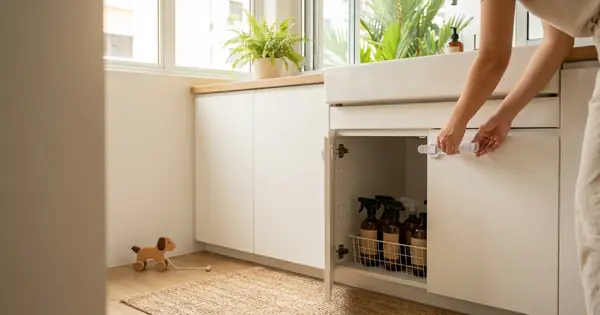
On safety, keep cleaning products stored high or locked away, and give younger helpers a damp microfibre cloth rather than a spray bottle. Chemical products are for adults and older teenagers who have been shown how to use them.
A weekly rhythm for six weeks
A light plan for the week stops any one job growing into a weekend project:
- Monday: bedding and towels in the wash.
- Wednesday: a quick bathroom wipe: basin, toilet, mirror and floor.
- Friday: fridge clear-out before the weekend shop.
- Weekend: one bigger job the family does together, such as a toy and book sort before Christmas presents arrive, or the balcony.
Two points in the holidays are worth marking. In the first week, empty school bags, wash them along with water bottles and lunch boxes, and recycle old worksheets. In the last week of December, get uniforms and shoes ready: MOE says Primary 1 starts school on Monday, 4 January 2027, and Primary 2 to 6 on Tuesday, 5 January.
When to add a cleaning session
Some signs that the routine needs help:
- The bathrooms are always behind, however hard you try
- Your weekends are going on cleaning instead of time with the children
- Guests are coming and the home needs more than a reset
- The kitchen floor is sticky again a day after mopping
If you already have a fortnightly cleaner, a one-off visit in the off weeks is the simplest way to cover the holidays. Our guide to weekly or fortnightly cleaning explains how to judge which rhythm suits a busy household, and our page on part-time cleaners covers how a regular arrangement works. A familiar face matters more with children at home, which is why keeping the same cleaner is worth asking for.
Before the cleaner arrives, do the daily reset. Every minute they spend picking up toys is a minute not spent on the bathrooms. If the children are home during the visit, keep them clear of wet floors and the products in use.
How it works with HomeMaster
Tell Helen, our AI assistant on WhatsApp, what you need: an extra one-off clean before visitors come, or a regular slot that suits a household with children. She replies with real open times and the exact price. A one-off 3 to 4 hour clean is $25/hour, and a weekly or fortnightly 3 to 4 hour slot is $20/hour. Weekends and public holidays, including Christmas Day, cost the same as a weekday. You need a working vacuum cleaner and mop at home; your cleaner brings the cloths, brushes, a scrub pad, bin bags and a multi-purpose cleaner.
Frequently asked questions
When are the year-end school holidays in 2026?
MOE's year-end school holidays for primary and secondary schools run from Saturday, 21 November to Thursday, 31 December 2026. School restarts in January 2027: Primary 1 on Monday, 4 January, and Primary 2 to 6 on Tuesday, 5 January.
What chores can a 3-year-old do?
HealthHub suggests that children aged 2 to 3 can put clothes in the laundry hamper, wipe up spills with a cloth, dust with a feather duster and pile books and magazines. Doing the job alongside you is the easiest way to start, and a damp cloth is safer than any product.
Should I book more cleaning during the school holidays?
If the bathrooms and kitchen keep falling behind even with a daily reset, yes. With a fortnightly cleaner, adding a one-off visit in the off weeks covers the holidays without changing your regular slot. Before guests, a 3 to 4 hour one-off visit gives the home a proper reset.
Can children be at home while the cleaner works?
Yes. Tidy toys off the floor first so the cleaner can get straight to cleaning, and keep the children away from wet floors and the products in use. Mention to Helen that there are young children at home when you book.
Sources
- School terms and holidays for 2026, Ministry of Education
- School terms and holidays for 2027, Ministry of Education
- Activity ideas to get your 3-year-old moving, HealthHub (Health Promotion Board)
- Getting fit through fun for kids, HealthHub (Health Promotion Board)
Need a hand at home?
Tell Helen what you need on WhatsApp. She replies with real open times and the exact price, GST included, and weekends cost the same as weekdays.