What instructions should you give a part-time cleaner?
Give your cleaner a short priority list, a do-not-touch list, a few product notes and your house preferences, then feed back after each visit. Here is how.
By the HomeMaster team · · Updated · 5 min read
Give your cleaner four things: a short list of priorities in order, a do-not-touch list, notes on which products go on which surfaces, and a few house preferences. Share them before the first visit, update the priorities before each visit when they change, and give specific feedback afterwards. A cleaner cannot read your mind, but a good one will follow a clear list closely.
Most frustration with a part-time cleaner comes from expectations that were never said out loud. This guide shows how to say them in a way that is quick for you and easy for the cleaner to act on.
Why a brief matters
A cleaning visit has a fixed length, and the cleaner has to decide what to do first. Without your priorities, they follow their own order. Ours work through a written standard covering six areas of the home, which is a sound default, but a standard cannot know that the shower glass bothers you more than the balcony, or that guests are coming tonight.
The brief matters most on the first visit, when the cleaner is still learning where things go and how you like them. Our guide to why the first clean takes longer explains that learning curve. A clear brief shortens it.
Part 1: your priorities, in order
Write three to five items, most important first. If the visit runs short, the cleaner stops at the bottom of your list, not the top.
Be specific about the place and the result. "Clean the bathroom" leaves everything open. "Master bathroom: shower glass and grout first, then the basin" tells the cleaner exactly where your standard sits. A useful list might look like this:
- Both bathrooms, especially the shower glass in the master bathroom
- Kitchen hob and backsplash
- Fresh sheets on the master bed (the clean set is on the chair)
- Mop all the floors
- If there is time: wipe the balcony sliding door
Keep the list to what fits the hours you booked. If it is always longer than the visit, rotate the extras: cabinet fronts one week, the fridge exterior the next, the fans the week after. For a sense of what a thorough visit covers, the room-by-room home cleaning checklist is a good reference to build your list from.
Part 2: the do-not-touch list
This is the list people most often forget, and the one that prevents the most upsets. Think about:
- Altars and prayer items. Say whether they should be dusted with care or left completely alone.
- Desks and paperwork. Many people prefer a work desk left exactly as it is, papers and all.
- Children's things. A half-built model or a school project on the floor can look like clutter to anyone else.
- Fragile or precious pieces. Heirlooms, collections, or anything you would be upset to see moved.
- What counts as rubbish. Ask for nothing to be thrown away unless it is clearly rubbish, and mention anything that looks like rubbish but is not, such as boxes you are keeping.
- Rooms that stay closed. If a room is off limits, say so and close the door.
Put valuables away before any visit. That is sensible with anyone in your home, and it means nobody has to wonder.
Part 3: products and surfaces
Tell the cleaner which product goes where, especially if you have surfaces that need care: natural stone counters, timber floors, a glass or induction hob, leather furniture or a stainless steel fridge. Keep the notes short, such as "stone cleaner only on the kitchen counter" or "timber floor: floor cleaner, mop well wrung out".
Label bottles that look alike, and keep everything in one place so no time goes on searching. Our guide to cleaning supplies to have ready covers the kit itself and which products suit which surfaces.
Part 4: house preferences
These are the small things that make a home feel like yours:
- How you like beds made, towels folded or cushions arranged
- Whether windows should be left open or closed when the cleaner leaves
- Which clothes to iron, which to hang, and which never go in the dryer
- Where the rubbish and recycling should go at the end of the visit
- Pets: where they will be, whether they can go into every room, and any doors that must stay shut
You do not need all of this on day one. Add a preference whenever you notice it matters to you.
How to give feedback that helps
Feedback works best when it is soon, specific and about the result rather than the person. Compare "the bathroom wasn't clean" with "the grout behind the toilet was missed, could that be part of every visit?". The second one can be acted on next time.
A few habits help:
- Say what went well, not only what did not. It tells the cleaner what to keep doing.
- Change one or two things at a time rather than sending a long list after every visit.
- Use short, plain sentences, one instruction per line. Plain words travel best, especially if English is not the cleaner's first language.
- Check the hours before blaming the person. If something keeps being missed, ask whether the visit is long enough for your list before assuming it is carelessness.
If you would rather not raise something face to face, tell the company and let them pass it on. That is part of what you are paying a company for.
Briefing your cleaner through HomeMaster
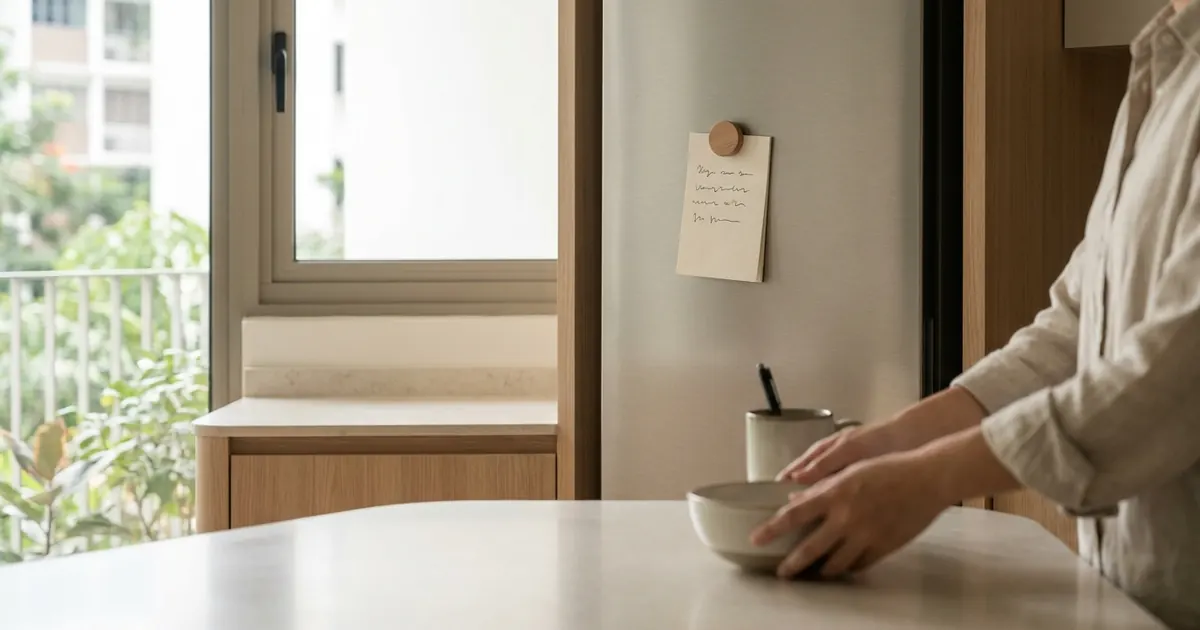
With HomeMaster you do not need a note on the fridge. Tell Helen, our AI assistant on WhatsApp, your priorities in a message, in your own words. She saves them as a note for your next visit, and the note shows on your cleaner's booking card, so it reaches whoever is coming even when the cleaner is assigned closer to the date. Details that do not change, such as pets and how to get in, are kept for every visit.
The reminder the day before a visit invites you to say what the clean should focus on if you have not already, so you can change the order from week to week. Once a cleaner is assigned, you can also ask Helen to pass a message to them directly, and she sends it.
After the visit, tell Helen how it went. A genuine quality miss is compensated with a voucher, and if you do not get on with your cleaner, she moves you to someone else. For a regular slot we aim to keep the same cleaner where possible, which is when a good brief pays off most: each visit builds on what your cleaner already knows about your home. You can see how regular visits work on our home cleaning page.
Frequently asked questions
Should I leave written instructions for a part-time cleaner?
Yes, but keep them short. A written list of three to five priorities in order, a do-not-touch list and a few product notes is easier to follow than a long letter, and nothing depends on anyone's memory. Update the priorities before each visit when they change, and keep the standing notes, such as pets and access, in one place.
What should I do if my cleaner keeps missing the same thing?
Name the exact spot and the result you expected, and ask for it to be part of every visit. If it is still missed, check whether your list fits the hours booked, because a long list in a short visit means something gets dropped. If the problem continues, tell the company; with HomeMaster, tell Helen, and a genuine quality miss is compensated.
Can I ask my cleaner to do different jobs each visit?
Yes. Keep your core priorities the same and rotate the extras, such as cabinet fronts, the fridge exterior or the fans, so each one gets done every few visits. With HomeMaster, the reminder before each visit asks what you would like the clean to focus on this time, so you can change the order from week to week.
How do I tell a cleaner I am not happy without causing offence?
Talk about the result, not the person, and be specific: which spot, what you expected, and what you would like next time. Start with something that went well. Clear feedback is easier to act on than hints, because guessing what you want is harder than being told. If you would rather not say it directly, tell the company and let them pass it on.
Need a hand at home?
Tell Helen what you need on WhatsApp. She replies with real open times and the exact price, GST included, and weekends cost the same as weekdays.