Can a part-time cleaner do laundry and ironing?
Yes: a part-time cleaner can wash, hang, fold and iron within the session, but that time comes out of the cleaning. Here is how to set it up and size the visit.
By the HomeMaster team · · Updated · 5 min read
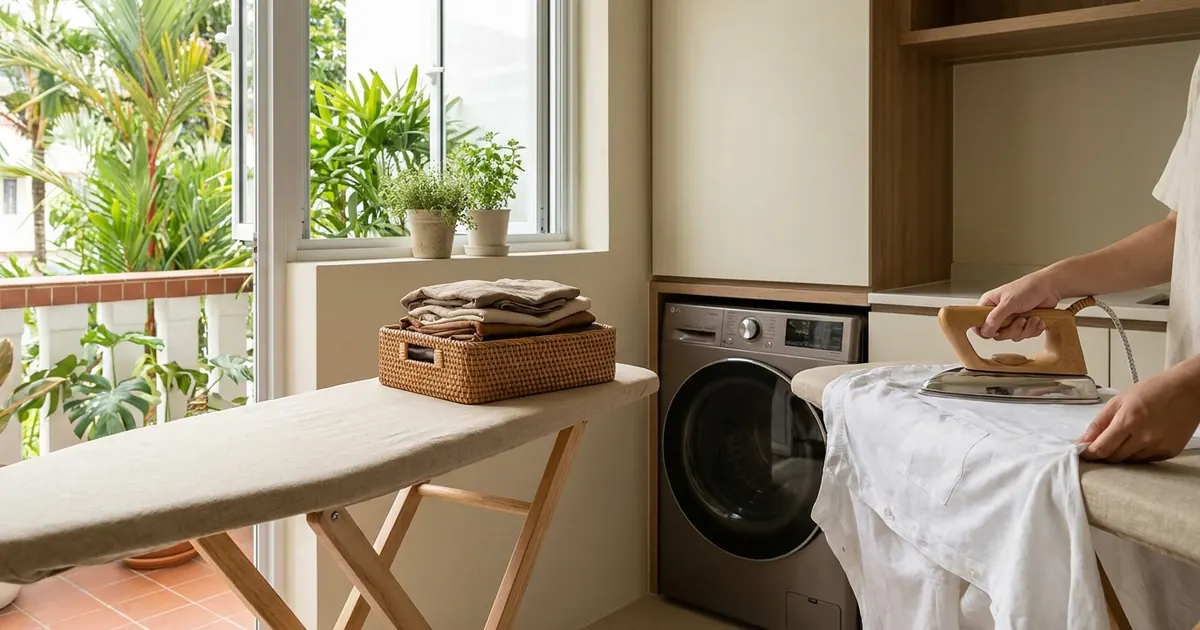
Yes. A part-time cleaner can wash, hang, fold and iron as part of a visit, and many households in Singapore ask for it. The catch is that it happens within the same session time as the cleaning, so an hour of ironing is an hour less of cleaning. If you want a full clean and a full basket of ironing, book a longer visit or split the two across visits.
This guide covers what laundry help involves, how to handle the time trade-off, how to set it up so nothing gets ruined, drying in Singapore's humidity, and ironing safely.
What laundry help looks like in a cleaning visit
Done properly, laundry is more than putting clothes in the machine. The written standard our cleaners work to treats laundry and ironing as its own area, with these checks:
- Sorting and washing: clothes sorted by colour and fabric, pockets checked before washing, stains pre-treated, and the machine loaded without overloading it.
- Machine hygiene: the drum, lint filter and rubber door seal wiped and checked.
- Drying: clothes hung or dried evenly spaced, collected promptly, and never folded while still damp.
- Ironing: the fabric type checked first; collars, cuffs, hems and seams ironed properly with no creases; the iron switched off and put away safely afterwards.
- Folding and hanging: folded neatly and consistently, hung where appropriate, and put back in the right place.
The rubber seal check is worth copying at home. In a humid climate, the fold of the seal on a front-loading machine is where water and lint collect and start to smell.
The trade-off: time
Laundry and ironing is the sixth area of our 75-point standard, and it is allowed 30 of the standard's 140 minutes. That is room for a modest amount. A week of work shirts and school uniforms for a family of four can take far longer than that on its own.
So it helps to decide, for each visit, what matters most:
| Your situation | A plan that usually works |
|---|---|
| A small household, a load or two a week | Fits comfortably alongside the cleaning in a 3-hour visit |
| A family with a lot of ironing every week | Book 4 hours, and give the cleaner a clear ironing limit so the bathrooms still get done |
| You want a full clean and the ironing is secondary | Ask for ironing only if there is time left at the end |
| Ironing matters more than cleaning this week | Say so, and name the two or three rooms to clean in the time left |
| A weekly or fortnightly slot with a lot of both | Alternate: one visit cleaning-first, the next laundry-first |
Our guide to how many cleaning hours a flat needs gives starting points by home size; add time on top of those for laundry.
Setting it up so it works
A few minutes of preparation prevents two familiar problems: a shrunken top and a cleaner who spends twenty minutes looking for the iron.
- Put the laundry in one place, already separated if you care about it (whites, darks, delicates).
- Keep anything that must not be machine washed apart. Dry-clean-only items, woollens and hand-wash pieces should be in a separate bag or not out at all.
- Say what to iron and what only to fold. "Iron shirts and school uniforms, fold everything else" is clear. "Do the laundry" is not.
- Show where things live: detergent, pegs, hangers, the iron and board. Check the iron works and the steam tank is filled or emptied as you prefer.
- Start the first load early. Ask for the machine to go on at the start of the visit, so it has finished its cycle while the cleaning happens.
- Say where finished items go: folded on each bed, hung in the wardrobe, or in a basket.
Our guide to briefing your cleaner covers how to write a short priority list that includes laundry.
Drying in Singapore's humidity
The Meteorological Service Singapore (MSS) puts the mean annual relative humidity at around 82%, often above 90% in the early morning and up to 100% in long spells of rain. Clothes washed during a morning visit are often still damp when it ends.
- Use the highest spin speed the fabrics allow, so less water is left to dry off.
- Hang with space between items so air can move through, near a window or in front of a fan.
- Accept that folding may be your job. Our standard says clothes are only folded once they are free of dampness, because folding damp clothes is how they start to smell musty. A cleaner can hang them; you fold them when they are dry.
- Use a dryer if you have one and the care labels allow it.
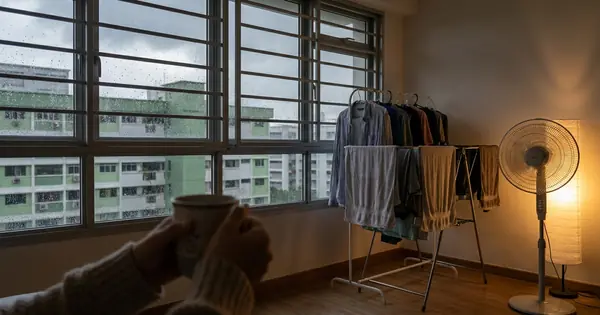
- On rainy days, dry indoors with a fan running and a window open; our monsoon season home guide has more on keeping damp under control.
Ironing safely and well
- Check the care label before setting the temperature. Delicate synthetics need a cooler iron than cotton.
- Iron items that need the same temperature together, coolest first, so the iron is not constantly heating and cooling.
- Switch it off when done. The Singapore Civil Defence Force (SCDF) advises always switching off electrical appliances when they are not in use. Let the iron cool upright, away from the edge of the board and out of children's reach.
Bed linen and towels
Changing beds fits naturally into a cleaning visit. Leave the fresh sets out on each bed so the cleaner does not have to guess. Washing the used sheets in the same visit is possible, but sheets and towels are bulky and slow to dry, so that load may need to be hung and left for you to bring in.
How it works with HomeMaster
With HomeMaster, laundry and ironing are included on request within the session time. It is not a separate add-on with its own charge: it uses the hours you book. Sessions are 2, 3 or 4 hours with one cleaner per visit.
Tell Helen, our AI assistant on WhatsApp, what laundry you want done and roughly how much, and she can suggest whether your usual session length still fits. If the first visit shows that ironing crowds out the cleaning, move to a longer slot. You can see what a session includes on our home cleaning page.
Frequently asked questions
Will a cleaner iron clothes they did not wash?
Yes. Many households leave a basket of dry clothes from earlier washes for ironing. Put them in one place, say which items to iron and which only to fold, and say where the finished clothes should go.
How much ironing can be done in one visit?
It depends on the clothes and how much cleaning you also want. Our written standard allows 30 minutes for laundry and ironing within a full clean. If you have a family's week of shirts and uniforms, give a clear limit or book a longer visit so the cleaning is not squeezed out.
Should I leave dry-clean-only clothes for the cleaner?
No. Keep dry-clean-only items, woollens and anything that must be hand washed away from the laundry pile, or clearly bagged and labelled. Those should go to a dry cleaner or be washed by you, following the care label.
Does laundry and ironing cost extra with HomeMaster?
There is no separate charge. Laundry and ironing are included on request and simply use the session time you book. If you want both a full clean and a lot of ironing, book a longer session so there is time for both.
Sources
- Climate of Singapore, Meteorological Service Singapore
- Civil Defence Emergency Handbook (10th edition): electrical safety, Singapore Civil Defence Force
Need a hand at home?
Tell Helen what you need on WhatsApp. She replies with real open times and the exact price, GST included, and weekends cost the same as weekdays.