How to degrease a kitchen hood, hob and cabinets
Soak metal hood filters in hot soapy water, wipe the hob and backsplash while warm, and do cabinet tops monthly. A Singapore guide to beating kitchen grease.
By the HomeMaster team · · Updated · 5 min read
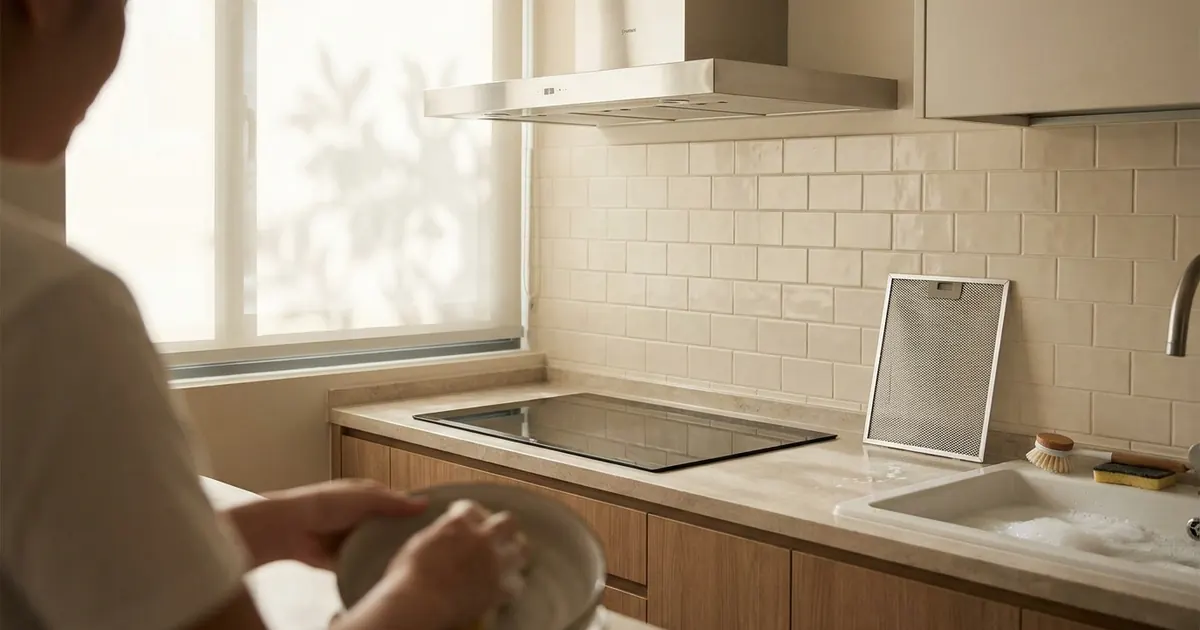
To degrease a kitchen hood, take out the metal mesh filters and soak them in hot water with dishwashing liquid or a kitchen degreaser, then brush, rinse and dry them. Wipe the hood's outside, the hob and the backsplash with warm soapy water or a degreaser while the grease is still soft, and dry them with a clean cloth. Little and often beats one heavy scrub.
This guide takes each greasy area in turn: the hood, the hob and backsplash, cabinet fronts and tops, then the habits that stop the build-up, and what a standard clean covers versus what needs extra time.
Kitchen grease: why it builds up, and what you need
Why it builds up so fast
Frying and stir-frying throw a fine mist of oil into the air. It settles on every surface near the hob, mixes with household dust and turns into a sticky layer that hardens over weeks. The hood, the wall behind the hob and the tops of nearby cabinets take the most.
There is a safety reason to stay on top of it as well as a hygiene one. In its home fire safety tips, the Singapore Civil Defence Force (SCDF) advises keeping stove-tops, cooker hoods and ovens clean and free of grease, and never leaving cooking unattended.
What you need
- Dishwashing liquid and hot water, which handle most fresh grease
- A kitchen degreaser that is safe for your surfaces, for older build-up
- A non-scratch scrub pad and a soft brush
- Microfibre cloths kept for the kitchen only, plus a dry cloth for polishing
- Rubber gloves and a basin, or a sink you can plug
Always check a new degreaser on a small hidden patch first, especially on painted, high-gloss or timber cabinet doors.
The cooker hood, step by step
- Switch off the hood and let the hob cool. A hot hob can burn you, and cleaner sprayed on hot metal evaporates before it works.
- Remove the metal mesh filters. Most slide or clip out; the hood's manual shows how.
- Soak them in the hottest water you can safely handle with dishwashing liquid or degreaser, for 15 to 30 minutes.
- Brush along the mesh with a soft brush, rinse with hot water and leave them to dry completely before refitting.
- Empty and wash the oil cup or tray, if your hood has one.
- Wipe the outside and the underside of the hood with degreaser on a cloth rather than sprayed straight at the controls, then polish dry. On stainless steel, wipe along the grain.
Some hoods recirculate air through a carbon filter instead of venting it outside. Carbon filters are usually replaced rather than washed, so check the manual before putting one in water.
How often? For a kitchen where someone fries most days, a monthly filter clean is a sensible rhythm. For light cooking, every two to three months may be enough. If grease drips from the filters, you have waited too long.
If the fan or the ducting inside the hood is clogged, or the hood is noisy and weak even with clean filters, that is a job for a technician rather than a cleaner.
The hob and backsplash
Gas hobs. Once cool, lift off the pan supports and burner caps and soak them with the hood filters. Wipe the hob surface with warm soapy water or degreaser. Spray the cloth, not the knobs, so liquid does not run into the controls.
Glass, ceramic and induction hobs. Use a cleaner made for glass hobs and a soft cloth. For burnt-on spots, a scraper made for glass hobs works better than a scrub pad, which can scratch.
Backsplash. Tiles take a degreaser well; follow with a brush along the grout lines, where grease sits. Glass backsplashes clean best with warm soapy water followed by a dry, lint-free cloth.
Cabinet fronts, handles and tops
Cabinet fronts near the hob collect a thin film you only notice when you touch it. Warm water with dishwashing liquid removes most of it; use a degreaser on laminate for older build-up, and be gentler on timber and high-gloss doors. Handles need extra attention because greasy hands add to them every day.
The tops of tall cabinets are often the dirtiest spot in a kitchen: out of sight, near the hob and covered in grease and dust. They sit above head height, so reaching them means a step stool. Many cleaning services, ours included, keep cleaners working from floor level for safety, so this is one to do yourself a few times a year. Lining the tops with newspaper or kitchen paper turns the job into a two-minute swap.
Habits that stop the build-up
- After frying: wipe the hob and the wall behind it while they are still slightly warm.
- Weekly: the hood's outside, cabinet fronts and handles, small appliances and the kitchen floor.
- Monthly: hood filters, pan supports and burner caps, and the lining on cabinet tops.
- Always: use one product at a time. The National Environment Agency's cleaning guidance says cleaning agents and disinfectants should not be mixed together, to avoid hazardous reactions.
What a standard clean covers, and what needs extra time
| Task | In our standard clean | Needs extra time or someone else |
|---|---|---|
| Outside and underside of the hood, oil tray | Yes | |
| Hob, knobs and backsplash | Yes | |
| Counters, including under movable items | Yes | |
| Cabinet fronts and handles | Yes | |
| Microwave inside and out | Yes | |
| Soaking and scrubbing hood filters | Extra time; ask for it before the visit | |
| Inside the oven | Extra time and an oven cleaner you choose | |
| Cabinet tops above head height | The household, from a step stool | |
| Hood motor or ducting | A technician |
Our cleaners work to a written 75-point standard, and the kitchen is its longest room area, with 30 minutes allowed. A kitchen with daily frying often needs more, so if yours is heavily used, make it the first priority for the visit or book a longer session. Our guide to the 75-point cleaning checklist shows what the kitchen checkpoints include.
How it works with HomeMaster
Tell Helen, our AI assistant on WhatsApp, that the kitchen comes first and whether you want the hood filters soaked, so your cleaner can plan the time. Your cleaner brings a multi-purpose cleaner, a non-scratch scrub pad and detail brushes. If your kitchen needs a stronger degreaser, or you have a glass or induction hob with its own cleaner, leave yours out and say so; our guide to the supplies to have ready explains who brings what.
The home cleaning page shows what a session includes. If your bathrooms need the same attention, our guide to cleaning bathroom grout in a humid home follows the same approach.
Frequently asked questions
How often should I clean my cooker hood filters?
Monthly is a sensible rhythm for a kitchen where someone fries most days, and every two to three months for light cooking. If the filters look dark and sticky or grease drips from them, clean them now. Carbon filters in recirculating hoods are usually replaced on the maker's schedule rather than washed.
Can I put hood filters in the dishwasher?
Many metal mesh filters can go in a dishwasher, but some finishes discolour, so check the hood's manual first. If in doubt, soak them in hot water with dishwashing liquid, brush and rinse. Never put a carbon filter in water unless the maker says it is washable.
What removes sticky grease from kitchen cabinet doors?
Start with warm water and a little dishwashing liquid on a microfibre cloth, then dry the door. For older build-up on laminate, use a kitchen degreaser tested on a hidden spot. Be gentler with timber and high-gloss finishes, and avoid scrub pads that scratch.
Will a part-time cleaner clean inside my oven?
It is not part of a standard clean, because oven cleaning takes time and usually a strong product. If you want it done, ask before the visit, allow extra time and provide an oven cleaner you are comfortable with. Ventilate the kitchen while it is used and follow the label.
Sources
- Civil Defence Emergency Handbook (10th edition): fire prevention tips to safeguard your home, Singapore Civil Defence Force
- Environmental Sanitation for High-Risk Non-Healthcare Premises in Singapore (November 2024), National Environment Agency
Need a hand at home?
Tell Helen what you need on WhatsApp. She replies with real open times and the exact price, GST included, and weekends cost the same as weekdays.