How to remove water stains from taps, tiles and glass
Soften the marks with a limescale remover or diluted vinegar, give it time to work, wipe with a non-scratch pad, rinse, and always dry the surface after.
By the HomeMaster team · · 5 min read
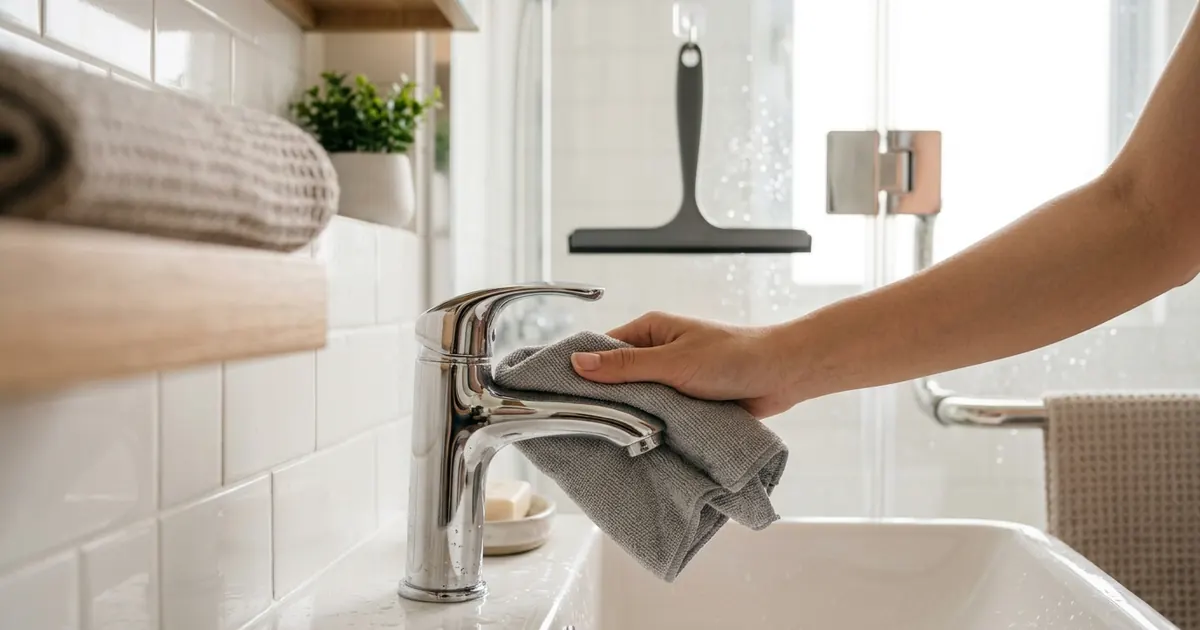
Water stains are the white or cloudy marks left when water dries on a tap, a tile or a pane of glass. The water evaporates and the minerals in it stay behind. To remove them, apply a limescale remover or diluted white vinegar and leave it for a few minutes to soften the marks. Then work it with a non-scratch pad, rinse with clean water, and dry the surface completely. Drying is the step most people skip, and it is the one that stops the marks coming back.
This guide covers the usual places, the right method for each surface, what not to use, and a simple habit that keeps stains away. Taps, basins and shower glass are also wiped and dried on every regular home cleaning visit, which stops new marks from building up.
Why water stains form
Every drop of water carries a little dissolved mineral. When it dries on a surface, the mineral stays behind as a faint spot. Over weeks, spots overlap into a dull film, and around taps and shower heads they build into a hard white crust called limescale.
Soap makes it worse. It combines with the minerals to form a grey, waxy layer on shower glass and tiles that ordinary wiping just moves around. In a humid Singapore bathroom, where surfaces stay wet for hours, both build up quickly.
How to remove water stains, surface by surface
What you need
- A limescale remover, or white vinegar diluted half and half with water in a spray bottle
- A non-scratch scrub pad
- A microfibre cloth, and a second dry one for buffing
- An old toothbrush or detail brush for tap bases and edges
- A squeegee for glass
- Rubber gloves
Taps and shower heads
Taps get the heaviest build-up, especially around the base and the spout tip.
- Soak a cloth in limescale remover or diluted vinegar and wrap it around the tap, so the liquid stays in contact with the crust.
- Leave it for the time the product label gives, or about 15 to 30 minutes for vinegar.
- Scrub the base and edges with a detail brush or old toothbrush.
- Rinse thoroughly with clean water.
- Buff dry with a dry microfibre cloth until it shines.
For a shower head that sprays unevenly, the nozzles may be blocked with scale. Many shower heads unscrew from the hose; soak the head in diluted vinegar in a bowl, then brush the nozzles and rinse. If yours cannot be removed, fill a plastic bag with the solution, tie it around the head, and leave it.
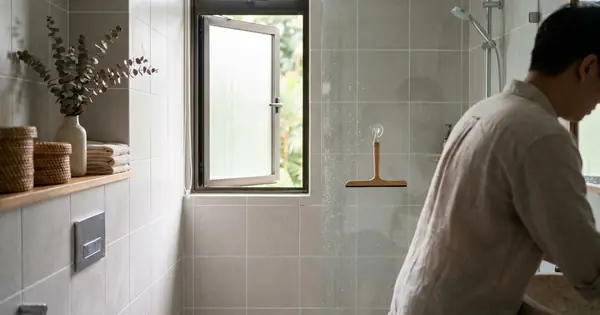
Shower glass
Glass usually carries a mix of mineral spots and soap scum.
- Spray the remover or diluted vinegar over the glass.
- Wait a few minutes so it can soften the film.
- Work it with a non-scratch pad in small circles, paying extra attention to the bottom third, which gets the most splash.
- Rinse with plenty of water.
- Squeegee from top to bottom, then dry the edges and the frame with a cloth.
Never use a scouring powder or a metal scraper on shower glass. The fine scratches they leave give the next stain somewhere to hold on.
Tiles and grout
Ceramic tiles handle limescale remover and vinegar well. Spray, wait, wipe with a non-scratch pad, and rinse. Grout lines need a stiff brush rather than a pad. Our guide to cleaning bathroom grout covers grout, soap scum and mould in a humid bathroom.
Kitchen sinks and counters
Stainless steel sinks show water spots clearly. Wipe the sink with diluted vinegar or a stainless steel cleaner, rinse, and dry it with a cloth, following the grain of the steel. For a quartz or solid surface counter, warm water and dishwashing liquid usually removes water rings; check the maker's care guide before using anything stronger.
Surfaces that need care
Some materials are damaged by the acids that dissolve limescale.
- Marble, granite, limestone and terrazzo. Acid, including vinegar and lemon, can etch these stones and leave dull patches that do not come back. Use a cleaner made for natural stone, and dry the surface after every use.
- Timber. A water ring on a wooden table or counter is a finish problem, not limescale. Avoid soaking the wood.
- Coated or coloured taps. Matte black and brushed gold finishes can be harmed by strong limescale removers. Use the gentlest option and check the maker's care advice.
If you are not sure what your counter or floor is made of, test any product on a small hidden spot first.
Safety
Limescale removers are acidic, and acids react badly with some other cleaners.
- Never mix products. The National Environment Agency (NEA) advises not mixing different disinfectant products, and using them in a well-ventilated area. Do not follow a limescale remover with a bleach-based cleaner on the same surface without rinsing it well in between.
- Open a window or run the exhaust fan while you work.
- Wear gloves and avoid contact with your eyes and skin, as NEA advises.
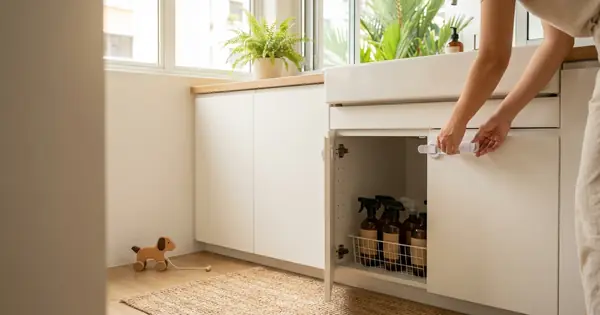
- Store products out of reach of children. Our guide to safer cleaning products for homes with kids and pets has more on this.
Keeping water stains away
Prevention takes less time than removal:
- Squeegee the shower glass after the last shower of the day.
- Dry the taps after use with a cloth kept by the sink.
- Run the exhaust fan or leave the door open so the bathroom dries faster.
- Do a light limescale wipe weekly, rather than a heavy scrub every few months.
How it works with HomeMaster
Water marks are named in the written 75-point standard our cleaners work to:
- The bathroom countertop, basin and tap free of watermarks
- Shower fittings free of limescale
- Mirrors and glass streak-free under direct light
The kitchen sink, counters and walls carry the same standard. You can see every point on our home cleaning checklist.
Your cleaner brings a window squeegee, a non-scratch scrub pad, detail brushes and a multi-purpose cleaner. Want a specific limescale product used, or have natural stone or coated taps? Leave the right product out and tell Helen, our AI assistant on WhatsApp, when you book a home cleaning visit. Heavy build-up that has been left for months may need extra time, so mention that too.
Frequently asked questions
Does vinegar remove hard water stains?
Yes, on most taps, ceramic tiles and glass. Mix white vinegar half and half with water, apply it, and give it time to soften the marks before scrubbing with a non-scratch pad. Rinse and dry afterwards. Do not use vinegar on marble, granite or other natural stone, because the acid can etch the surface.
How do I stop water spots on shower glass?
Squeegee the glass from top to bottom after the last shower of the day and let the bathroom air out. It takes under a minute and stops most spots forming. A weekly wipe with a limescale remover or diluted vinegar removes anything that builds up in between.
Can I use bleach on limescale?
Bleach does not dissolve limescale; it is a disinfectant, not a descaler. Use a limescale remover or diluted vinegar instead. Never use bleach and a limescale remover together or one straight after the other, since mixing cleaning products is unsafe. NEA advises against mixing products.
Sources
- List of Active Ingredients for General Disinfection, National Environment Agency
Need a hand at home?
Tell Helen what you need on WhatsApp. She replies with real open times and the exact price, GST included, and weekends cost the same as weekdays.