Aircon leaking water? The causes and what to do now
Indoor aircon leaks usually come from a blocked drain or tray, or a dirty filter that lets the coil ice up. What to do now, and which service fixes each cause.
By the HomeMaster team · · Updated · 5 min read
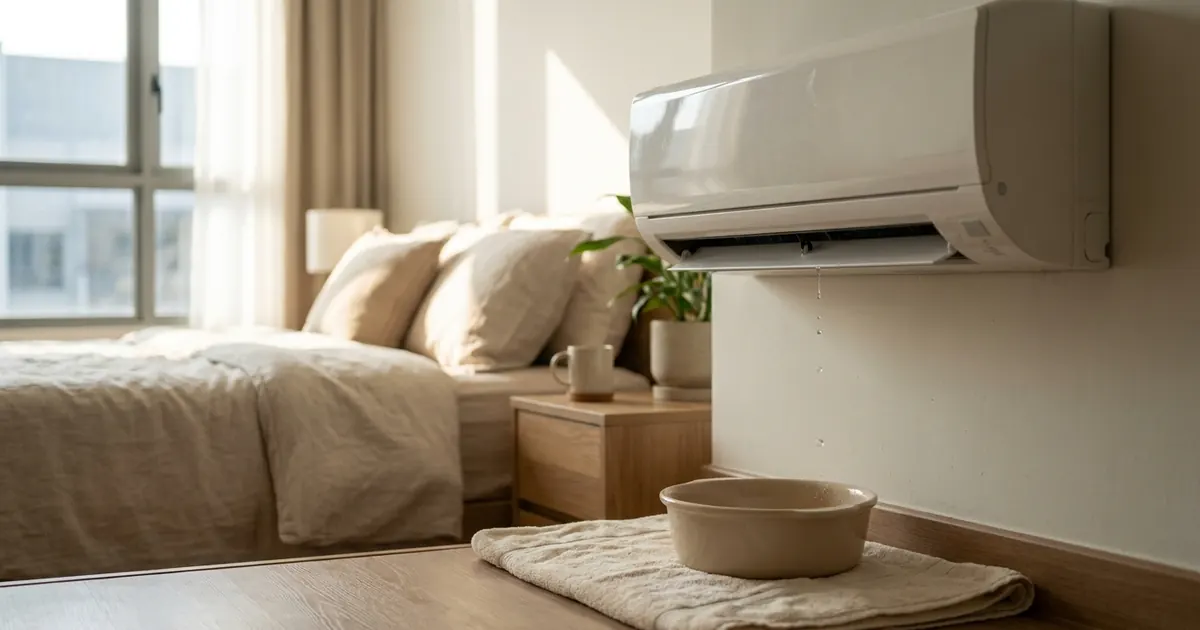
An aircon leaking water indoors almost always means the water it makes is not reaching the drain. The usual causes are a blocked drain pipe or tray, or a dirty filter that lets the coil ice up and then overflow as it melts. Switch the unit off, catch the water, check and rinse the filters, and if it still drips, book a service matched to the cause.
Here is how to work out which cause you have, what to do in the next ten minutes, and which service actually fixes it.
Why an aircon makes water at all
An aircon cools the air and also dries it. NEA notes that air-conditioners control both temperature and humidity. As warm, humid air passes over the cold coil inside the indoor unit, moisture condenses on it, drips into a tray underneath and runs out through a drain pipe. HDB's guidance is that this condensed water should discharge into a floor trap inside the flat.
In Singapore the unit is pulling moisture out of air that the Meteorological Service Singapore puts at around 82% relative humidity on average, so a steady trickle down the drain is normal. A leak just means that water has found another way out.
The usual causes
A blocked drain pipe or tray
This is the usual culprit. Dust and a slimy film build up in the tray and the pipe, especially on a unit that has gone a long time without servicing. The water backs up, overflows the tray and drips from the bottom of the unit or down the wall. A tray blocked badly enough can also make the unit trip and stop.
A dirty filter and an iced-up coil
A clogged filter or a dusty coil cuts the airflow over the coil. With too little warm air passing over it, the coil can get cold enough to freeze. When the ice melts, often after you switch off or while the unit cycles, more water arrives than the tray can handle. Signs include weaker cooling, frost on the pipes at the side of the unit, and drips or even droplets blowing out of the vents.
Low refrigerant
A unit short of refrigerant can also ice up, with the same result. Refrigerant runs in a sealed loop, so a unit that keeps running low has a leak somewhere, and topping it up again only treats the symptom.
An installation problem
A unit that is not level, a drain pipe without enough downward slope, or a pipe that is kinked or poorly joined can all leak even when everything is clean. It tends to show up with a newly installed unit or after renovation work. This is an installer's job, not a cleaning job.
Water outside rather than inside
If the drips are from the outdoor unit or its piping, running down the wall or onto the unit below, that is a problem too. HDB's guidance is that all the piping for the condensing unit should run internally, with the condensed water draining properly into an internal floor trap, and that there should be no leakage of condensation water. For a condensing unit that leaks, HDB suggests owners consider its patented air-conditioner tray.
What to do right now
- Switch the unit off, with the remote and at the wall switch if it has one.
- Protect the room. Put a towel or a basin under the drip, and move electronics, extension cords and anything valuable out of the way. Keep water away from power points, and do not touch switches with wet hands.
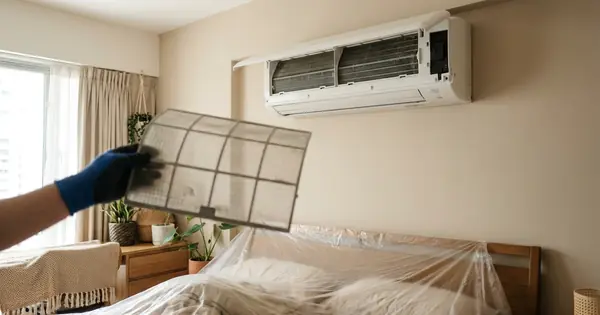
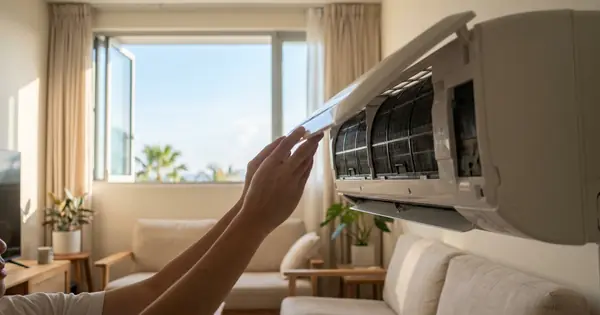
- Check the filters. Lift the front panel, slide them out and look. If they are grey with dust, rinse them, let them dry fully in the shade, and put them back. NEA's everyday advice is to check filters once a month anyway.
- Look for ice. If you see frost on the coil or the pipes, leave the unit off until it has fully thawed before running it again.
- Follow the drain pipe. Check where it ends. A choked floor trap at the other end can back the water up; HDB's advice is to keep floor trap gratings closed and to clear the solids that block them.
- Note the pattern. Does it drip only after hours of running, only at start-up, from the bottom of the unit or from the vents? That tells the technician a lot.
Two things not to do: do not push wire or sticks up the drain pipe, which can puncture it or push the blockage further in, and do not keep running a leaking unit above a socket or appliance.
Which service fixes which cause
| Cause | What fixes it | What to book |
|---|---|---|
| Drain blocked, first time it has leaked | Clearing the drainage and cleaning the filters | General servicing |
| Dirty filter, iced coil | Clean filters; a coil that is caked needs a deeper clean | General servicing, or a chemical wash if cooling is weak too |
| Tray clogged with buildup, leak keeps coming back | Taking the fan coil apart to clean the tray fully | Chemical overhaul |
| Low refrigerant | Finding and repairing the leak, then refilling | A leak repair, not another top-up |
| Unit not level, pipe slope wrong | Re-levelling or re-routing | An installer |
A general service checks and clears the drainage as part of the visit. When a leak keeps returning, the tray usually needs the fan coil taken apart, which is what a chemical overhaul does. If the coil itself is caked and cooling has weakened, a chemical wash cleans it in place. Our guide to general servicing, chemical wash and overhaul covers the differences in more depth.
Stopping it happening again
A leak from a blocked drain or a dirty coil is a maintenance problem that built up slowly. Rinse the filters monthly, and have units in daily use serviced every 3 to 4 months so the drain tray and pipe never get the chance to clog; our guide on how often to service your aircon sets out a schedule. After renovation, or after months of not using a unit, get it checked before you rely on it every night.
Getting it sorted with HomeMaster
Tell Helen, our AI assistant on WhatsApp, where the water is coming from, how often it drips, when the unit was last serviced and how many units you have. She will point you to the service that fits and show real open slots with the exact total. You can also book directly online.
A chemical wash starts from $80 and a chemical overhaul from $150 for one unit. Prices include GST, there is no weekend surcharge and nothing extra for paying by card. If the cause turns out to be a repair or an installation fault rather than something a service can fix, we will tell you so.
Frequently asked questions
Is it safe to keep using an aircon that is dripping water?
It is better to switch it off until you know the cause. Water running down a wall can reach sockets, extension cords and appliances, and it damages walls, floors and furniture over time. Check and rinse the filters, let any ice thaw, and book a service if the drip returns.
Why does my aircon leak only after running for hours?
That pattern often means ice is slowly building on the coil and then melting faster than the tray can drain it. Restricted airflow from a dirty filter or coil is a common cause, and low refrigerant is another. A partly blocked drain that cannot keep up with a long run can do the same.
Why is water spitting out of my aircon vents?
Droplets from the vents usually mean the tray is full and overflowing into the airflow, or that ice on the coil is melting and being blown out. Switch off, check the filters and look for frost. If it keeps happening after the filters are clean, the drain or tray needs attention.
Will a chemical wash stop my aircon leaking?
If the leak comes from a dirty coil icing up, a wash can help, because it cleans the coil in place. A tray clogged with years of buildup usually needs an overhaul, which takes the fan coil apart. Neither fixes low refrigerant or an installation fault.
Sources
- Maintaining Air Conditioners in HDB Flats, Housing & Development Board
- Floor Traps: Home Care Guide, Housing & Development Board
- Energy Saving Tips by Appliance, National Environment Agency
- Tips on Buying Energy-Efficient Appliances, National Environment Agency
- Climate of Singapore, Meteorological Service Singapore
Aircon due for a service?
See real open times and the exact total for your units before you book. GST included, and weekends cost the same as weekdays.