Spring cleaning with a cleaner: who does what
You sort, declutter and decide; the cleaner cleans. How to split a spring clean with an hourly cleaner in Singapore, in what order, and how many visits to book.
By the HomeMaster team · · Updated · 5 min read
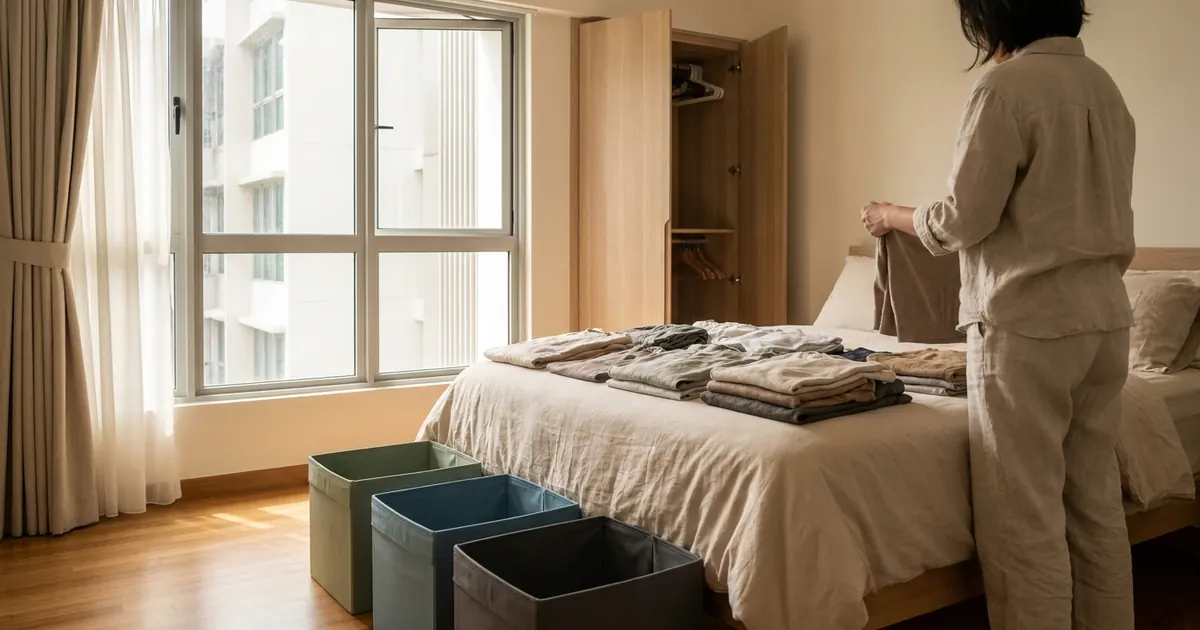
The simplest way to spring clean with a cleaner is to split it by skill: you sort, declutter and decide, and the cleaner cleans. Clear a room before each visit so the cleaner's hours go on cleaning inside the emptied cupboards, the high places and the bathrooms, not on shuffling your things from one pile to another. For a family flat, plan on two or more sessions rather than one very long day.
This guide is about dividing the work. If you are cleaning for Chinese New Year, our three-weekend Chinese New Year plan sets out the calendar.
Who does what
| Job | You | The cleaner |
|---|---|---|
| Deciding what to keep, donate, recycle or throw | Yes | No |
| Emptying wardrobes, cabinets and drawers you want cleaned inside | Yes | No |
| Sorting paperwork, valuables, medicines and keepsakes | Yes | No |
| Taking donations and recycling out of the home | Yes | No |
| Wiping inside emptied cabinets, drawers and wardrobes | No | Yes |
| Ceiling fans, light fittings and the tops of cabinets | No | Yes |
| Bathrooms: grout, shower screens, taps and floor traps | No | Yes |
| Kitchen: hob, hood, backsplash, cabinet fronts and counters | No | Yes |
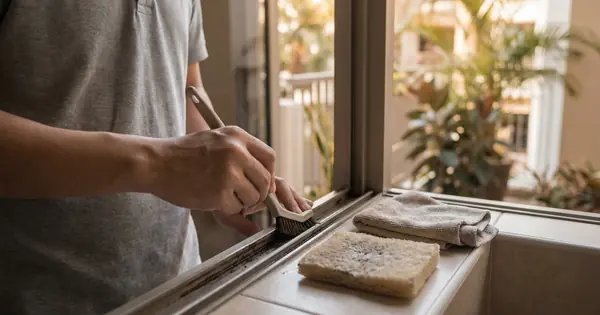
| Windows, tracks and grilles reachable safely from inside | No | Yes |
| Floors, vacuumed and mopped | No | Yes |
| Curtain dry cleaning, sofa or mattress extraction, aircon servicing | Book a specialist | No |
A cleaner can tidy within limits you set, such as putting things back on a shelf you have sorted. What a cleaner should not do is decide what you keep, because nobody else knows which box of papers matters.
Before the first session: sort and stage
Work one room at a time, and finish each one before starting the next. Five half-sorted rooms are harder to clean than one finished room.
- Four piles: keep, donate, recycle and throw. Bags or boxes, labelled.
- Empty what you want cleaned inside. Leave emptied cabinets and wardrobes open, so the cleaner can see what is ready.
- Clear surfaces. Counters, tables and shelves you want wiped should be bare or close to it.
- Put away what you do not want touched: documents, jewellery, medicines, anything fragile or precious.
- Have the vacuum cleaner and mop ready. With HomeMaster you need a working vacuum cleaner and mop; attachments help with fans, tracks and sofas. Your cleaner brings the colour-coded cloths, a scrub pad, a detail brush set for grout and window tracks, bin bags and a multi-purpose cleaner. If a surface needs a particular product, such as natural stone or sealed timber, leave that out too.
Where the things you clear out can go
Clearing out is only finished when the things have left the home. The National Environment Agency's advice is a useful guide:
- Blue recycling bins take paper, glass, plastic and metal. Empty food or liquid residue and rinse if needed, because food or liquid waste contaminates everything else in the bin. Shoes, batteries and ceramics are among the items that cannot go in.
- Donations: NEA suggests passing on clothing in good, usable condition, and donating unwanted things in good working condition to charitable organisations.
- E-waste such as old phones, computers, batteries, bulbs and small appliances does not go in the blue bin. NEA lists 3-in-1 bins for ICT equipment, batteries and lamps, retailer in-store collection, free one-for-one takeback by retailers when they deliver a new product of the same type, quarterly e-waste collection drives in residential areas, and a doorstep collection service.
- Bulky items such as old furniture: check with your town council or condo management on how removal works where you live.
The order that saves hours
Within each room, the rule is top to bottom and dry before wet: dust falls, so high places go first and floors go last. Across the home, put the heaviest work in the first session, so it is done even if a later visit has to move.
A sensible split over two sessions:
- Session one: the kitchen and bathrooms, which hold the most detailed work: degreasing, descaling and grout. Add the insides of kitchen cabinets you emptied.
- Session two: bedrooms, the living and dining area, windows and tracks, ceiling fans, and the floors of the whole home.
If there is a third session, use it for wardrobes, the storeroom, the balcony and whatever did not fit. Booking the sessions close together, on consecutive days or weekends, keeps the momentum going and stops the first rooms from slipping back.
Tell the cleaner your priorities at the start of each visit. Our guide to briefing your cleaner covers how to write a short, clear list.
How many sessions to book
With HomeMaster, sessions are 2, 3 or 4 hours and each visit is one cleaner. These are rough starting points for a spring clean of a sorted, lived-in home:
| Home | Starting point |
|---|---|
| Studio or 2-room flat | One 4 hour session |
| 3-room flat | One or two 4 hour sessions |
| 4-room or 5-room flat, 2 to 3 bedroom condo | Two 4 hour sessions |
| Executive flat or large condo | Two or three 4 hour sessions |
| Landed home | Three or more 4 hour sessions |
Book more if the kitchen is used for heavy cooking, the bathrooms have not been descaled in a while, or you want every cabinet and wardrobe done inside. Book less if you already have a regular cleaner keeping on top of the basics. Our explainer on what a deep clean means goes further into sizing a big job.
How it works with HomeMaster
We do not sell a spring cleaning package: a spring clean with us is one or more long hourly sessions, which is what most spring cleaning actually is. Tell Helen, our AI assistant on WhatsApp, your flat type, what you have sorted, and which rooms matter most, and she suggests how to split the sessions and shows real open times with the exact price. A one-off 3 to 4 hour session is $25/hour, with no surcharge on weekends or public holidays. More on single visits is on our one-off cleaning page.
Frequently asked questions
Does HomeMaster sell a spring cleaning package?
No. A spring clean with HomeMaster is one or more long hourly sessions of 2, 3 or 4 hours, with one cleaner per visit. Tell Helen your flat type and what needs doing, and she suggests how many sessions to book and shows real open times and the exact price.
Should I declutter before the cleaner comes?
Yes. Decluttering needs decisions only you can make, and a cleaner working around full cupboards and piles spends paid time moving things. Sort a room, empty what you want cleaned inside, clear the surfaces and put valuables away before each visit.
Can a cleaner help me declutter?
A cleaner can tidy within limits you set, such as putting things back on a shelf you have sorted or bagging rubbish you have marked. Deciding what to keep, donate or throw stays with you, because nobody else knows which things matter.
How many hours does a spring clean take?
For a sorted 4 or 5-room flat, plan on about two 4 hour sessions; a 3-room flat is one or two, and a landed home three or more. Heavy cooking, limescale or wanting every cabinet done inside adds time.
Sources
- Waste minimisation and recycling at home, National Environment Agency
- Where to recycle e-waste, National Environment Agency
Need a hand at home?
Tell Helen what you need on WhatsApp. She replies with real open times and the exact price, GST included, and weekends cost the same as weekdays.