Post-renovation cleaning in Singapore: what to expect
Renovation dust settles for days and comes out in stages. What an hourly cleaner removes, what needs a specialist crew, and why it takes several visits.
By the HomeMaster team · · Updated · 5 min read
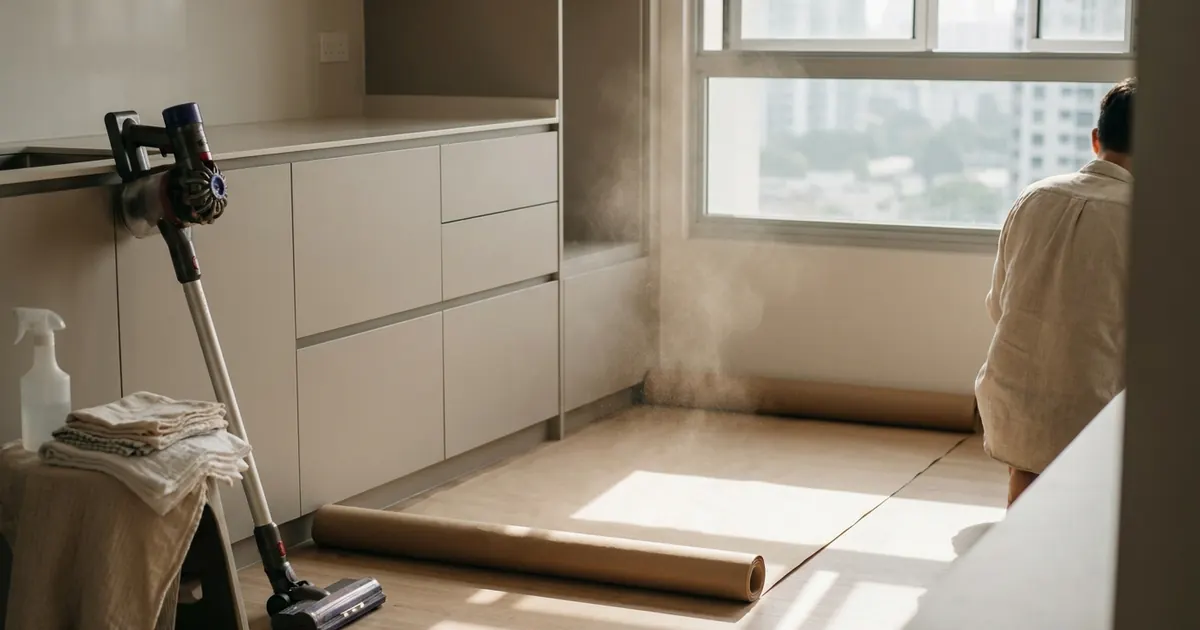
Post-renovation cleaning is a dust job done in stages. The fine dust from sanding, cutting and drilling hangs in the air and keeps settling for days, into cabinets, window tracks, fan blades and aircon filters, so the first clean removes the bulk and the second and third catch what comes down afterwards. An hourly cleaner handles that dust work well. Paint splatter, cement residue, stubborn glue and floor polishing are a different trade: a post-renovation crew or your contractor.
Why the dust keeps coming back
Renovation dust is fine and powdery, and there is a lot of it. It drifts into places that are normally closed, like the insides of drawers and the gaps behind built-in carpentry, and it keeps settling out of the air and off high surfaces long after the tools stop.
That is why a single clean the day after the works rarely lasts. You wipe a counter, and by the next morning there is a fresh film on it. Each pass removes a large share of what is left, and after two or three the flat stays clean.
It also explains why the order matters. Clean the floor before the fans and the tops of the cabinets, and the dust from above lands on the floor you have just mopped.
What an hourly cleaner does, and what needs a crew
| Job | Hourly cleaner (one person) | Post-renovation crew or contractor |
|---|---|---|
| Vacuuming and dry-dusting every surface | Yes | Yes |
| Wiping inside cabinets, drawers and wardrobes | Yes | Yes |
| Window frames, tracks and sills reachable safely from inside | Yes | Yes |
| Bathrooms, the kitchen, and mopping floors in several passes | Yes | Yes |
| Paint splatter on glass, tiles or fittings | No | Yes |
| Cement or grout haze on tiles | No | Yes |
| Stickers and glue that need specialist tools or solvents | No | Yes |
| Floor polishing | No | Yes |
| Removing renovation debris and offcuts | No | Contractor |
If you can see paint spots, a cloudy film on new tiles or glue left from protective film, deal with that first. Ask your renovation contractor whether it is part of their job; if not, book a post-renovation crew. Then book the hourly cleans for the dust.
Clean in three passes
Pass one: the bulk. Once the contractor has removed the debris and the dusty works are over, vacuum every surface, including walls, window tracks, the insides of cabinets and the floor, then wipe. Expect cloths to go grey quickly.
Pass two: a day or a few days later. The dust that was still in the air has now landed. Wipe everything again, inside and out, and mop the floors with clean water, changing it often.
Pass three: after the fit-out. Curtains, lights, appliances and furniture bring their own packaging dust. This is the final clean before you move in, and it is the one that makes the flat feel finished.
In a smaller flat with light works, passes two and three can sometimes be one visit. After hacking, tiling or a lot of carpentry, keep them separate.
The order within each session
- High first: ceiling fans, light fittings, the tops of wardrobes and cabinets, and the outside of aircon casings.
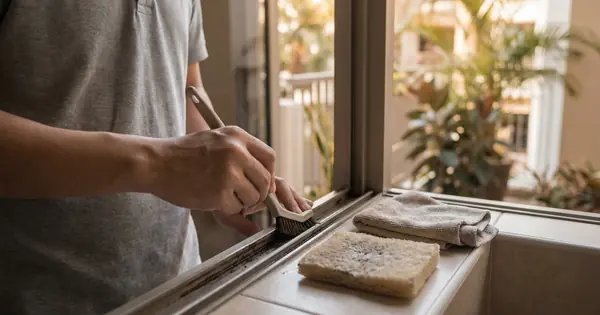
- Walls and windows: frames, tracks, sills and grilles reachable safely from inside. A soft brush and a vacuum nozzle lift dust from tracks better than a wet cloth.
- Insides: every cabinet, drawer and wardrobe, working from the top shelf down.
- Surfaces: counters, shelves, doors, handles and switches.
- Bathrooms and kitchen: sanitary fittings, basins, the sink, hob and hood.
- Floors last: vacuum, then mop with clean water, working towards the front door.
The rule behind it is dry before wet. Water on thick dust makes a paste that smears into grout and corners, so always vacuum or dry-dust first.
What to have ready
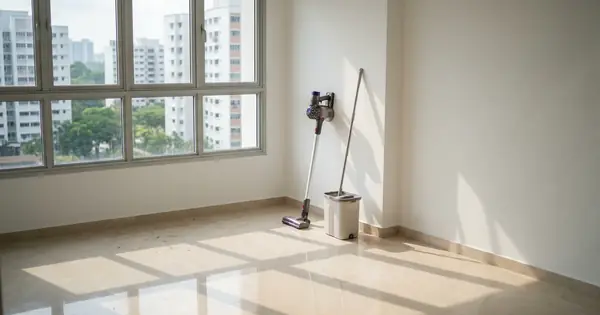
With HomeMaster, your cleaner brings the colour-coded cloths, a window squeegee, a scrub pad, a detail brush set for grout and window tracks, bin bags and a multi-purpose cleaner. You provide a working vacuum cleaner and mop, and after a renovation both work hard:
- A vacuum with a brush and crevice nozzle, emptied and its filter cleaned often, because fine dust clogs it quickly
- A mop and its bucket, with the water changed often
- A few spare cloths or old towels for the dustiest first pass
- Any particular product your new surfaces need, such as a cleaner for natural stone or sealed timber; avoid abrasives on new stone, timber and glossy laminate
Keep the windows open while dusting where you can, and switch the aircon off while the dust is up.
Don't forget the aircon
If the aircon ran during the works, or was installed before the dusty jobs finished, its filters and coil have probably taken in a lot of dust. A cleaner can wipe the outside of the casing; the inside is a technician's job. Book general servicing before you rely on the units, and next time, keep them off and covered while the works are on.
How many sessions, and how it works with HomeMaster
With HomeMaster, cleaning sessions are 2, 3 or 4 hours with one cleaner per visit, so post-renovation cleaning is a series of long sessions rather than a package. As rough starting points: a 3-room flat is two 4 hour sessions, a 4-room or 5-room flat two to three, and an executive flat, large condo or landed home three or more. Heavy works such as hacking and tiling add time. If you are moving into a new flat, our BTO move-in checklist shows where these cleans fit in the whole sequence.
Tell Helen, our AI assistant on WhatsApp, what was renovated, whether the debris is gone and when you plan to move in. She suggests how to split the sessions and shows real open times and the exact price. A one-off 3 to 4 hour session is $25/hour, with no surcharge on weekends or public holidays. More on a single visit is on our one-off cleaning page. We do not do paint, cement or glue removal, or floor polishing, and our cleaning services guide is candid about what to book elsewhere.
Frequently asked questions
How many times should I clean after renovation?
Usually two or three times. The first pass removes the bulk of the dust, the second a day or a few days later catches what has settled out of the air, and the last, after the furniture and fittings are in, is the final clean before moving in. Heavy works such as hacking need more passes.
Can a normal home cleaner do post-renovation cleaning?
For the dust, yes: vacuuming and wiping every surface, the insides of cabinets, window tracks, bathrooms, the kitchen and floors. Paint splatter, cement or grout haze, glue that needs specialist tools, and floor polishing are jobs for a post-renovation crew or your contractor.
Does HomeMaster remove paint stains or cement from tiles?
No. HomeMaster sells home cleaning by the hour, which covers the dust work, not specialist post-renovation work. Paint, cement and glue removal and floor polishing need a post-renovation crew or your renovation contractor. Get that done first, then book the hourly cleans.
When should I start cleaning after renovation?
Once the dusty works are finished and the contractor has removed the debris. Cleaning while sanding or cutting is still going on is wasted effort. Start with a bulk dust-down, then plan the next pass a day or a few days later.
Need a hand at home?
Tell Helen what you need on WhatsApp. She replies with real open times and the exact price, GST included, and weekends cost the same as weekdays.