How to read cleaning company reviews in Singapore
Recent, specific reviews across several platforms tell you more than a high average. How to read cleaning reviews and spot fake ones, using official tips.
By the HomeMaster team · · Updated · 5 min read
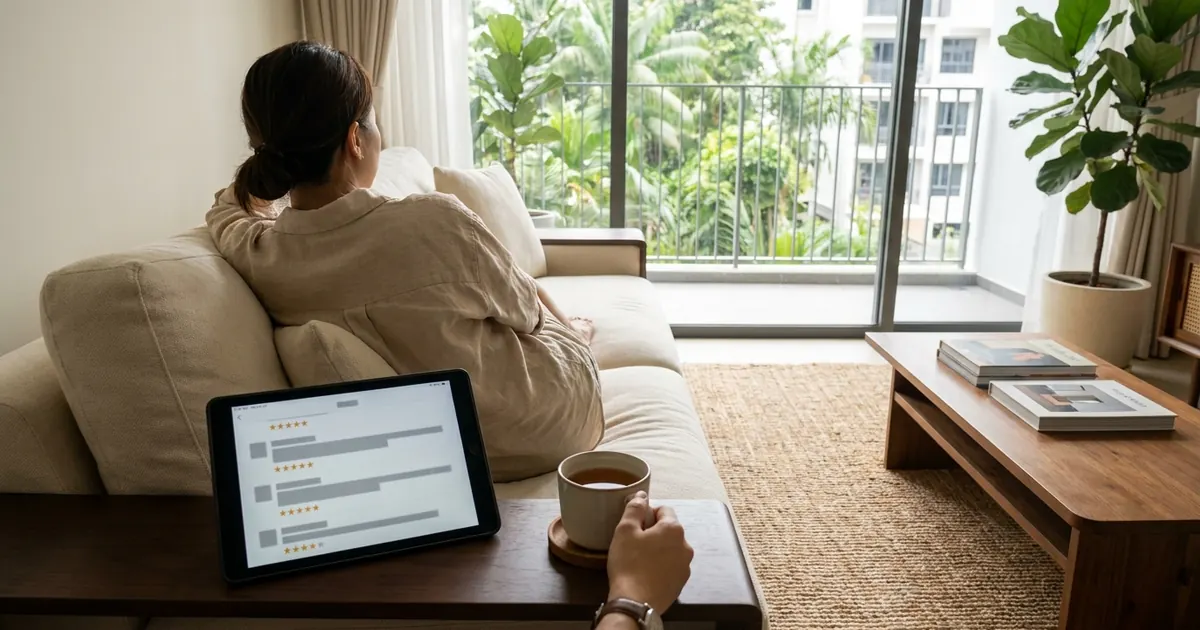
The most useful cleaning reviews are recent, specific and spread across more than one platform. Read a few reviews at every score, look at how the company answers complaints, and be wary of a perfect record built on vague praise. The Competition and Consumer Commission of Singapore publishes tips for spotting fake reviews, and they apply well to home services.
Reviews matter more for cleaning than for most purchases, because you are letting someone into your home and the service is only as good as the people doing it on the day. Here is how to read them well.
Start with recency and the spread
A cleaning company's reviews from two years ago tell you about its cleaners, scheduling and management two years ago. Look first at the last few months.
Then look past the average. The Commission's advice is to look at the spread of review scores rather than just the number of reviews and the average, and to read a selection of reviews with different scores before forming your own view. A company with mostly good reviews and a few thoughtful complaints is often a clearer picture than one with nothing but top marks.
What a useful cleaning review contains
The best reviews read like a report of a real visit. They tell you what kind of home it was, how long the session was, what was done well and what was not, and whether the person booked again.
| When a review mentions | It tells you |
|---|---|
| The home type, the session length, and which rooms were done well or rushed | How much a session really covers, and where the limits are |
| A regular cleaner being away and who came instead | How the company handles cover |
| Moving or cancelling a booking | How flexible the terms are in practice |
| Something broken or damaged, and what happened next | Whether there is a real damage process |
| Only a word or two of praise | Very little |
A review that mentions a problem and how it was fixed is often the most useful one on the page. Every service has off days; what matters is what happens next.
Read the complaints, and the replies
Negative reviews show you how things fail. For cleaning, look for patterns rather than single stories: repeated no-shows, surprise fees at the end, damage that was never resolved, or a different cleaner every visit when a regular one was promised.
Then read the company's replies. A good reply is specific, takes responsibility where it should, and offers a way to fix things. A defensive reply, or the same pasted paragraph under every complaint, tells you what dealing with them would be like. Also notice complaints about things the company does not sell, such as a cleaning firm criticised for not shampooing a carpet; those say more about expectations than about the service.
Signs a review may be fake
The Commission's consumer tips for online reviews list the tell-tale signs:
- Overly positive patterns, such as only five-star reviews with no moderate or negative ones, or overly negative ones, such as many one-star ratings with no detail
- Generic language that lacks detail or leans on buzzwords like "amazing", "perfect" or "worst"
- Many reviews under similar names, using similar language, or sharing the same spelling and grammar mistakes
It also suggests looking wider. Check whether the reviews on a business's own website are consistent with reviews on other websites that do not belong to the business, and consider whether a platform has safeguards, such as verifying that reviewers are real customers and not allowing incentivised reviews.
This is not hypothetical. In 2024 the Commission found a furniture business had posted fake reviews on its own website using real customers' initials without their consent. In 2025 it acted against a car detailing business that used ChatGPT to write fake reviews and posted them on a third-party platform, stating that the posting of fake customer reviews by a business is an unfair trade practice because consumers might be misled. In another 2025 case, it found a bed company displaying a review-site rating on its own platforms when it had no active account on that site, and the rating was based mainly on reviews the business had written itself.
The lesson from the last case is simple: check a rating on the review platform itself, not on a badge on the company's website.
Checks that go beyond reviews
Reviews tell you how people felt. A few other checks tell you what the business actually is.
- Is it registered? A free search on ACRA's Bizfile shows whether a company's registration is live and where it is registered. Our guide to spotting a cleaning scam explains how.
- Who employs the cleaners? If migrant workers clean homes part-time, the company should be allowed to deploy them, for example under MOM's Household Services Scheme.
- Is the pricing clear? Our guide to reading a cleaning quote lists what to ask.
- What happens when things go wrong? Cover, damage and cancellation terms often matter more than a small difference in scores. Our guide to the hidden costs of a cheap cleaner goes through them.
If you were misled
If a business misled you and you want redress, the Commission points consumers to the Consumers Association of Singapore (CASE), on 6277 5100 or at case.org.sg, which can help through negotiation or mediation. You can also report unfair trade practices to CASE, or file a complaint with the Commission through its feedback form.
Reviews and HomeMaster
We do not quote our own rating in our articles, and we would rather you read what customers say on platforms we do not control than take our word for it. Read our reviews the way this guide suggests: recent ones first, a spread of scores, and how we reply.
If something goes wrong with a visit, tell Helen, our AI assistant on WhatsApp. A genuine quality miss is compensated with a voucher, and damage is covered up to a stated cap per item. You can see what a session covers, and what it does not, on our home cleaning page.
Frequently asked questions
How can I tell if cleaning reviews are fake?
Look for the signs the Competition and Consumer Commission of Singapore lists: only top scores with no moderate or negative reviews, generic praise with buzzwords like amazing or perfect, and many reviews under similar names with similar wording or the same spelling mistakes. Compare the reviews with those on sites the business does not own.
Should I trust testimonials on a cleaning company's own website?
Treat them as a starting point. A business chooses what appears on its own site. The Commission suggests checking whether those reviews are consistent with reviews on other websites that do not belong to the business, and checking any rating on the review platform itself rather than on a badge.
Are fake reviews illegal in Singapore?
The Competition and Consumer Commission of Singapore has stated that the posting of fake customer reviews by a business in relation to a consumer transaction is an unfair trade practice under the Consumer Protection (Fair Trading) Act, because consumers might be misled. It has taken action against businesses that did so.
What can I do if a cleaning company misled me?
For redress, the Commission points consumers to the Consumers Association of Singapore (CASE), on 6277 5100 or at case.org.sg, which can help through negotiation or mediation. You can also report an unfair trade practice to CASE, or file a complaint with the Commission through its feedback form.
Sources
- Consumer Tips for Online Reviews (infographic), Competition and Consumer Commission of Singapore
- Loft Home Furnishing Caught Posting Fake Customer Reviews, Competition and Consumer Commission of Singapore
- Action Taken Against Lambency Detailing for AI-Generated Fake Reviews on Sgcarmart.com, Competition and Consumer Commission of Singapore
- CCS Warns Operators of Hotel Bed Company for Misleading Use of Logos and Trustpilot Rating, Competition and Consumer Commission of Singapore
- About Fair Trading Practices, Competition and Consumer Commission of Singapore
Need a hand at home?
Tell Helen what you need on WhatsApp. She replies with real open times and the exact price, GST included, and weekends cost the same as weekdays.