End-of-tenancy cleaning in Singapore: protect your deposit
Empty the flat first, clean inside every cabinet and appliance, service the aircon and photograph it all. What landlords check at a Singapore handover.
By the HomeMaster team · · Updated · 6 min read
To get your deposit back, hand the home back in the condition you received it, apart from fair wear and tear: emptied, cleaned inside and out, with the aircon serviced and any damage made good. Do the final clean after the movers leave, not before, and photograph the result before you return the keys.
This guide covers the clauses worth rereading, what landlords commonly look at during the handover, the order to work in, and which jobs an hourly cleaner can do and which need a specialist.
Start with your tenancy agreement
Your own agreement decides what you owe, so read it before you book anything. It is easy to forget the details a year or two after signing.
The Council for Estate Agencies (CEA) publishes a recommended tenancy agreement template for HDB flats and another for private homes. Using it is not compulsory and your agreement may differ, but it shows the kind of clauses to look for. Its end-of-tenancy checklist expects:
- The home thoroughly cleaned, including all cabinets, wardrobes, appliances, windows, lights, furniture and fixtures
- All your belongings removed
- The home in substantially the same condition as at the start, save for fair wear and tear
- Damage made good where you removed nails, screws, adhesive hooks or fittings
- Receipts showing the aircon was serviced regularly
- All keys, access cards, instruction manuals and inventory items accounted for
In your own agreement, look for these clauses in particular:
- Aircon servicing. The template asks the tenant to service the units at least once every three months and to produce the receipts at the end. Chemical cleaning, when needed, sits with the landlord in the template, but yours may say otherwise.
- Curtains. The template includes a clause asking the tenant to have all curtains professionally dry cleaned on moving out, with a receipt.
- Deductions from the deposit. Under the template, the landlord gives written notice of a breach and 14 days to put it right before deducting a reasonable amount.
- Special conditions. Extra clauses, such as a requirement for professional cleaning, may be added here. In the template, special conditions win where they conflict with the standard terms.
What landlords commonly check at the handover
The template's property condition report has rows for floors, walls, ceilings, doors and locks, lighting, windows, curtains, appliances and furniture, each with a move-in column, a photo column and a move-out column. That is a fair map of where a landlord will look.
| Area | What gets looked at | Who handles it |
|---|---|---|
| Kitchen | Grease on the hob, hood and backsplash; inside cabinets, fridge and oven; sink and taps | A cleaner, with time planned for the insides |
| Bathrooms | Limescale on taps and glass, grout, mould on sealant, floor traps | A cleaner; badly stained sealant may need redoing by a handyman |
| Walls | Nail holes, marks left by hooks and tape, scuffs | A handyman or painter |
| Floors | Dust, stains, scratches | A cleaner for cleaning; polishing is specialist |
| Aircon | Servicing receipts, drips, musty smell | An aircon technician |
| Curtains | Stains, dry cleaning receipt | A curtain cleaning company |
| Windows, fans, lights | Dust, fingerprints, dead insects | A cleaner, for surfaces reachable safely from inside |
Empty first, then clean
A common mistake is doing the final clean while you still live there. Boxes and furniture hide the dust, and moving day brings in more dirt. Work in this order:
- Two to three weeks before the handover: book the aircon servicing, any curtain cleaning or repairs, and the cleaning sessions. Agree the joint inspection date with your landlord.
- Before moving day: keep the vacuum cleaner and mop out of the moving boxes, because the final clean needs both.
- Moving day: everything goes. Donate or dispose of what you are not taking.
- Repairs next: filling holes and paint touch-ups make their own mess, so they go before the final clean.
- The clean: in an empty home, ideally the day after the move.
- Your own walk-through: check every cabinet, take dated photos and gather your receipts.
- Joint inspection and key return.
Keep the water and electricity running until the inspection. The template also says the tenant should not end the utilities accounts, because the landlord needs power and water to check the taps, toilets and appliances.
The order to clean an empty home
Work top to bottom and from the back of the home towards the front door, so you never walk through a room you have already finished.
- High first: ceiling fans, light fittings, the tops of wardrobes and kitchen cabinets.
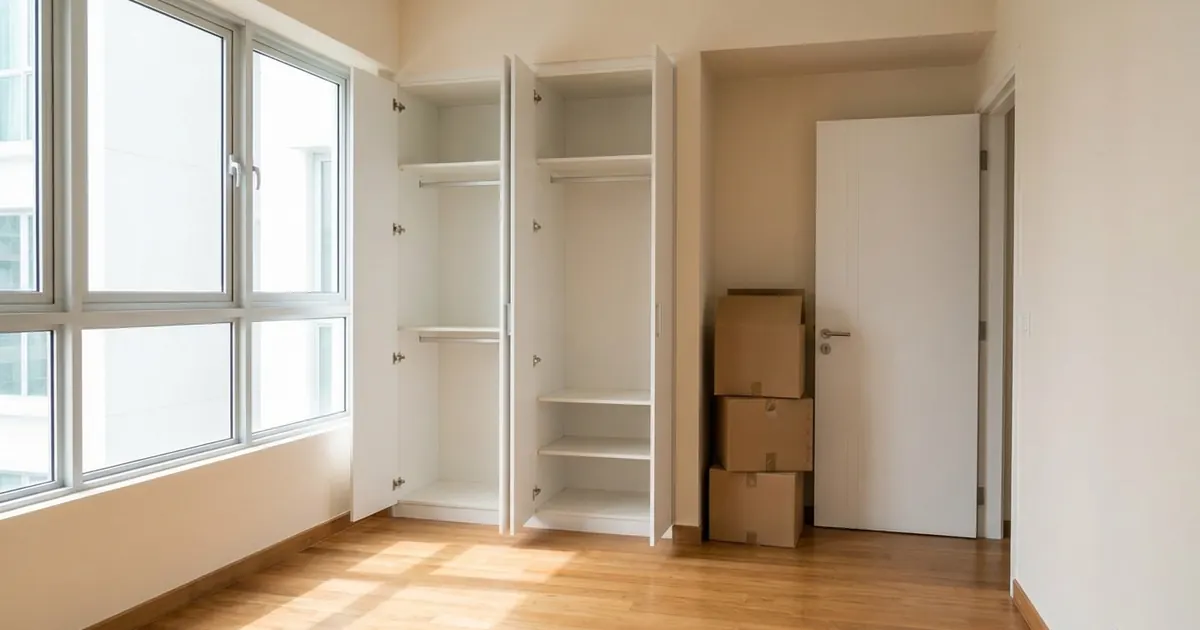
- Insides next: every cabinet, drawer and wardrobe, then the fridge (switched off and left open to dry) and the oven if one was provided.
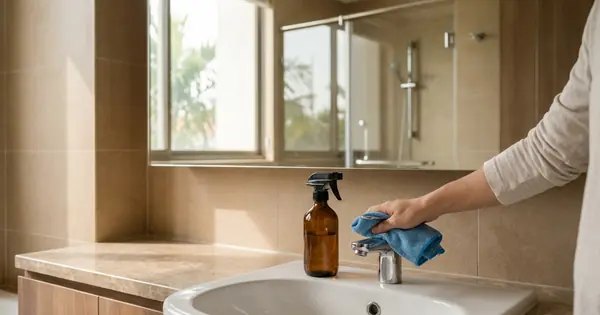
- Bathrooms: descale taps, shower screens and basins, scrub grout, clean the floor traps.
- Kitchen surfaces: hood, hob, backsplash, counters, sink and cabinet fronts.
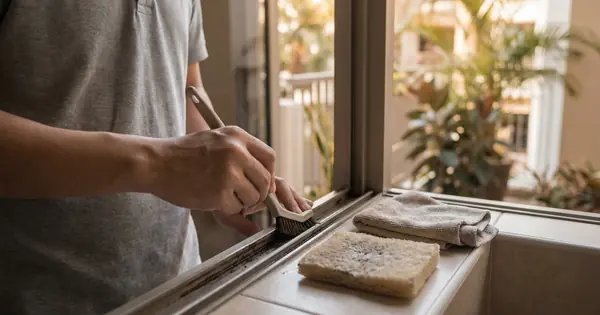
- Windows and doors: tracks, sills, grilles that can be reached safely, handles and switches, where fingerprints build up.
- Floors last: vacuum, then mop, finishing at the door.
What an hourly clean covers, and what needs a specialist
An hourly home cleaner does everything in the list above. What they do not do is specialist work that needs other skills or equipment:
- Curtain dry cleaning
- Carpet shampooing, and sofa or mattress extraction
- Filling holes and painting walls
- Floor polishing
- Pest control
- Aircon servicing, which is a technician's job
If your agreement asks for any of these, book them separately and keep the receipts; the template asks for receipts for curtain cleaning and aircon servicing. Our guide to what a home cleaner does goes into the grey areas.
How long to book
With HomeMaster, cleaning sessions are 2, 3 or 4 hours with one cleaner per visit, so a move-out is one or more long sessions rather than a package. These are rough starting points for an empty home that was kept reasonably clean:
| Empty home | Starting point |
|---|---|
| Studio or 2-room flat | One 3 or 4 hour session |
| 3-room flat | One 4 hour session |
| 4-room or 5-room flat, 2 to 3 bedroom condo | Two 4 hour sessions |
| Executive flat, large condo or landed home | Two or more 4 hour sessions |
Book more time for a heavily used kitchen, hard water marks on glass, pets, or a home that has gone months without a proper clean. Our guide to cleaning hours by flat type explains what drives the time. Two sessions on consecutive days work well: the heavy work first, the details second.
Before you hand over the keys
Walk through with your own copy of the move-in inventory list and condition report. Photograph each room, the insides of cabinets and appliances, and anything that was already worn when you moved in. Put the aircon servicing, curtain and repair receipts in one folder.
If you and your landlord disagree about a deduction afterwards, the Small Claims Tribunals hear disputes over residential tenancy agreements of up to 2 years. This guide is not legal advice; your agreement and the tribunal's own guidance are what count.
How it works with HomeMaster
Tell Helen, our AI assistant on WhatsApp, that it is a move-out: your flat type, whether it will be empty, and your handover date. She suggests how many sessions to book and shows real open times and the exact price. A one-off 3 to 4 hour session is $25/hour, and weekends and public holidays cost the same as a weekday. You need a working vacuum cleaner and mop at the flat on the day; your cleaner brings the cloths, brushes, a scrub pad, bin bags and a multi-purpose cleaner. You can see what a single visit covers on our one-off cleaning page.
We also do aircon servicing, so the servicing receipt your agreement asks for can be sorted in the same WhatsApp chat. For the jobs we do not sell, such as curtains, carpets or painting, our cleaning services guide is candid about what to book elsewhere.
Frequently asked questions
Do I have to hire professional cleaners when my tenancy ends?
Only if your agreement says so. The recommended template on CEA's website expects the home to be thoroughly cleaned and the curtains professionally dry cleaned, but it does not say who must do the general cleaning. Check your agreement's end-of-tenancy clauses and any special conditions, and keep receipts for anything it requires.
How long does a move-out clean take?
For an empty home that was kept reasonably clean, a 3-room flat is roughly one 4 hour session and a 4 or 5-room flat roughly two. A greasy kitchen, hard water marks or pets add time. With one cleaner per visit, a bigger job is split over two sessions close together.
Do I need to service the aircon before moving out?
Check your agreement. The recommended template on CEA's website asks tenants to service the units at least once every three months and to produce the receipts at the end of the tenancy. If your last service was a while ago, book one before the joint inspection and keep the receipt.
Can my landlord deduct cleaning costs from my deposit?
It depends on your agreement. Under the recommended template, the landlord can deduct a reasonable amount to remedy a breach, but only after giving written notice and 14 days to put it right. Read your own clauses, and keep photos and receipts in case you need them.
Sources
- Agreements and checklists, Council for Estate Agencies
- Tenancy agreement template for HDB flats, Council for Estate Agencies
- Tenancy agreement template for private residential property, Council for Estate Agencies
- Renting or renting out, Council for Estate Agencies
- Small Claims Tribunals, Singapore Courts
Need a hand at home?
Tell Helen what you need on WhatsApp. She replies with real open times and the exact price, GST included, and weekends cost the same as weekdays.